MAY I EXPLAIN
MAY I EXPLAIN why the month of May is very significant for the AANHPI Community and in particular for me, a Chinese American? After all, this is the month dedicated to celebrating this very diverse group of people.
The AANHPI Community represents over 28 million people in the U.S, a significant number. We Matter. We should be Seen, Heard and Included, not for some laws, but because We Are Americans.
But first, please take the time to understand that “AANHPI” is not a country or a specific ethnicity. This Community is not a homogenized monolith. It matters to understand… and we definitely do not all look alike.
The ‘AA’ term is for Asian American people of a diverse pan-ethic group that encompasses over 20+ countries (and territories), which includes East Asia, Southeast Asian and the South Asian regions of our globe. And if you don’t understand your geography, this includes (disclaimer that I am not covering all):
East Asian: Chinese, Hong Kongers, Japanese, Macanese, Mongolian, North Korean, South Korean and Taiwanese
Southeast Asian: Cambodian, Filipino, Hmong, Indonesian, Laotian, Malaysian (Burmese), Myanmar, Singaporean, Thai, Vietnamese
South Asian: Bangladeshi, Indian, Nepalese, Pakistani, Sri Lankan
The ‘NH’ term is for Native Hawaiian, which refers to the indigenous Polynesian people of the Hawaiian Islands.
The ‘PI’ term is for Pacific Islander, which includes the 3 major sub regions of Melanesia, Micronesia, Polynesia. Countries include:
Melanesia: Fiji, Papua New Guinea, Solomon Islands, Vanuatu
Micronesia: Federated States of Micronesia, Kiribati, Marshall Islands,Nauru,Palau
Polynesia: Cook Islands, New Zealand, Niue, Samoa, Tong, Tuvalu
The month of May was originally designated as Asian Pacific Islander Heritage Week in 1979, signed as a joint resolution by President Jimmy Carter in 1978.
But the seed of this recognition was led by a former Capitol Hill staffer, Jeanie Jew, who observed and was frustrated that during the U.S. Bicentennial (1976) there was the lack of recognition for the contributions of Asian and Pacific Islander people to America.

Photo: From Washington Post Obituary, 11.24.2024
So, Jeanie, a fourth-generation Chinese American and a great granddaughter of a Chinese immigrant who came to the U.S. in the 1800s to work on the transcontinental railroad, took action and advocated. Time Magazine story here.
The legislation was championed by Asian-American lawmakers, including Senators Daniel Inouye and Spark Matsunaga, and Representative Norman Mineta.
This groundwork would eventually lead to further changes in 1992 when the whole month of May would be signed into law and recognized as Asian Pacific Islander Heritage Month (later expanded to AANHPI).
It was two significant U.S. Historical dates that were the impetus for selecting May.
May 7, 1843 is identified as the date of the first Japanese Immigrant, Nakahama Manjiro, who came to the United States (Massachu
May 10, 1869, known as “Golden Spike Day” commemorates the completion of the first transcontinental railroad, the most significant U.S. infrastructure project in history, mostly built by Chinese immigrants.
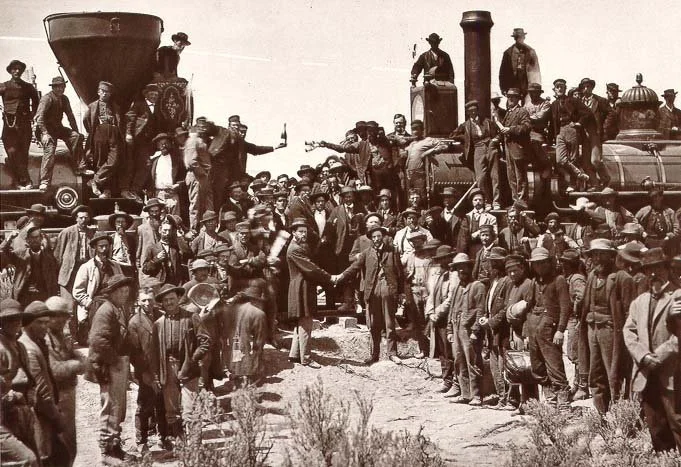
The Infamous Andrew J. Russell photo (Why aren’t there more Chinese in the photo?)
Why This Matters: These efforts to recognize Asian Americans, Native Hawaiians and Pacific Islanders motivates people like me to step up to share some of my own personal (and significant) moments of recognition in a busy May 2026, in St. Louis and Missouri. The groundwork of Jeanie Jew has empowered others to carry on the torch of recognizing our great AANHPI Community.
On May 3, 2026, the Very Asian Foundation (VAF) and the St. Louis Cardinals celebrated AAPI Heritage Month (against the LA Dodgers and Shohei Ohtani no less), honoring 5 trailblazing St. Louisans making meaningful contributions to the community and beyond. Historical Note: VAF was instrumental in getting the Cardinals to celebrate their first AAPI Theme Night in 2023.
The Very Asian Foundation, founded in St. Louis by news anchor, Michelle Li, bridges the gap between community and journalism by serving the underserved and solving problems. Learn more about the Very Asian Foundation, #VeryAsian
But did you know that the origins of VAF was prompted by an incident on New Years Day (2022) when a caller left a message to Michelle after her newscast, complaining that she was “being very Asian?” It was not a compliment. So, Michelle took action and spoke out.
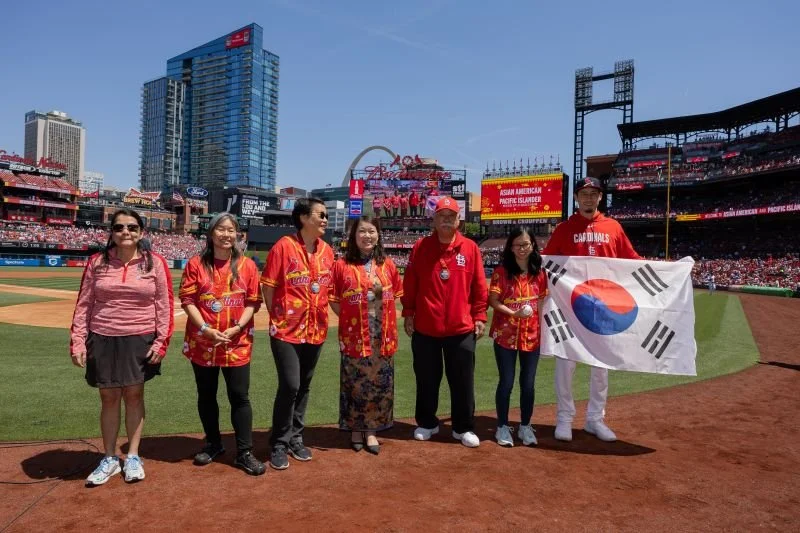
2026 Honorees: Amy Buhr, Robin Hattori, Helen Lee, Min Liu, Tom Saito, Clare Nipper (jersey artist), Riley O’Brien (St. Louis Cardinal, Korean descent). Photo courtesy of the St. Louis Cardinals
Fun Fact: Did you know that the St. Louis Cardinals currently have Asian Americans on the team? Lars Nootbar (Japanese descent), Riley O’Brien (Korean descent), J.J. Weatherholt (Korean descent) and former Cardinals, Tommy Edman (Korean descent) Tommy Pham (Vietnamese descent), Kolten Wong (Native Hawaiian, Chinese, Filipino descent).
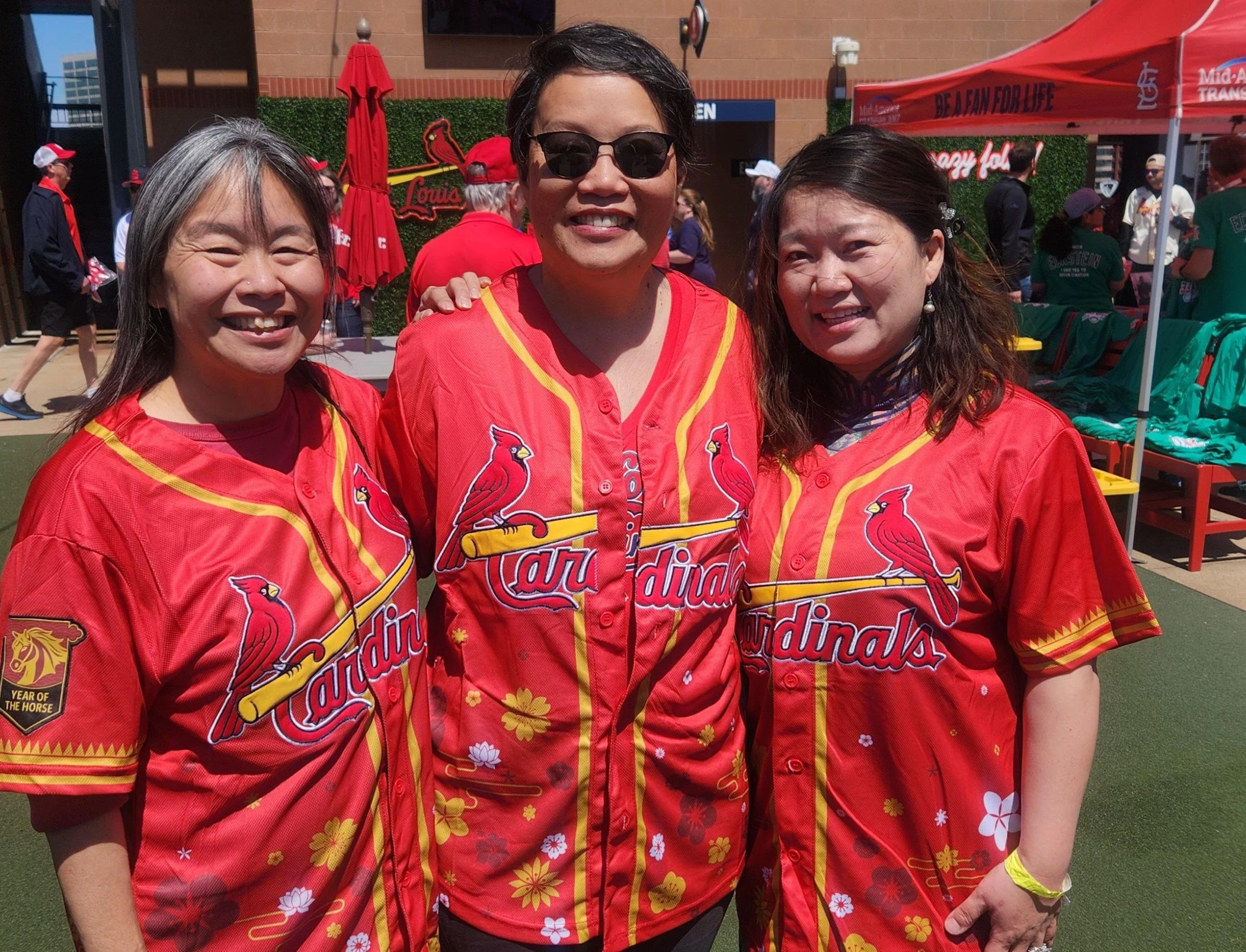
Community Leaders, Robin Hattori, Helen Lee, Min Liu (Photo by Peter Tao, capture wife/partner Helen Lee).
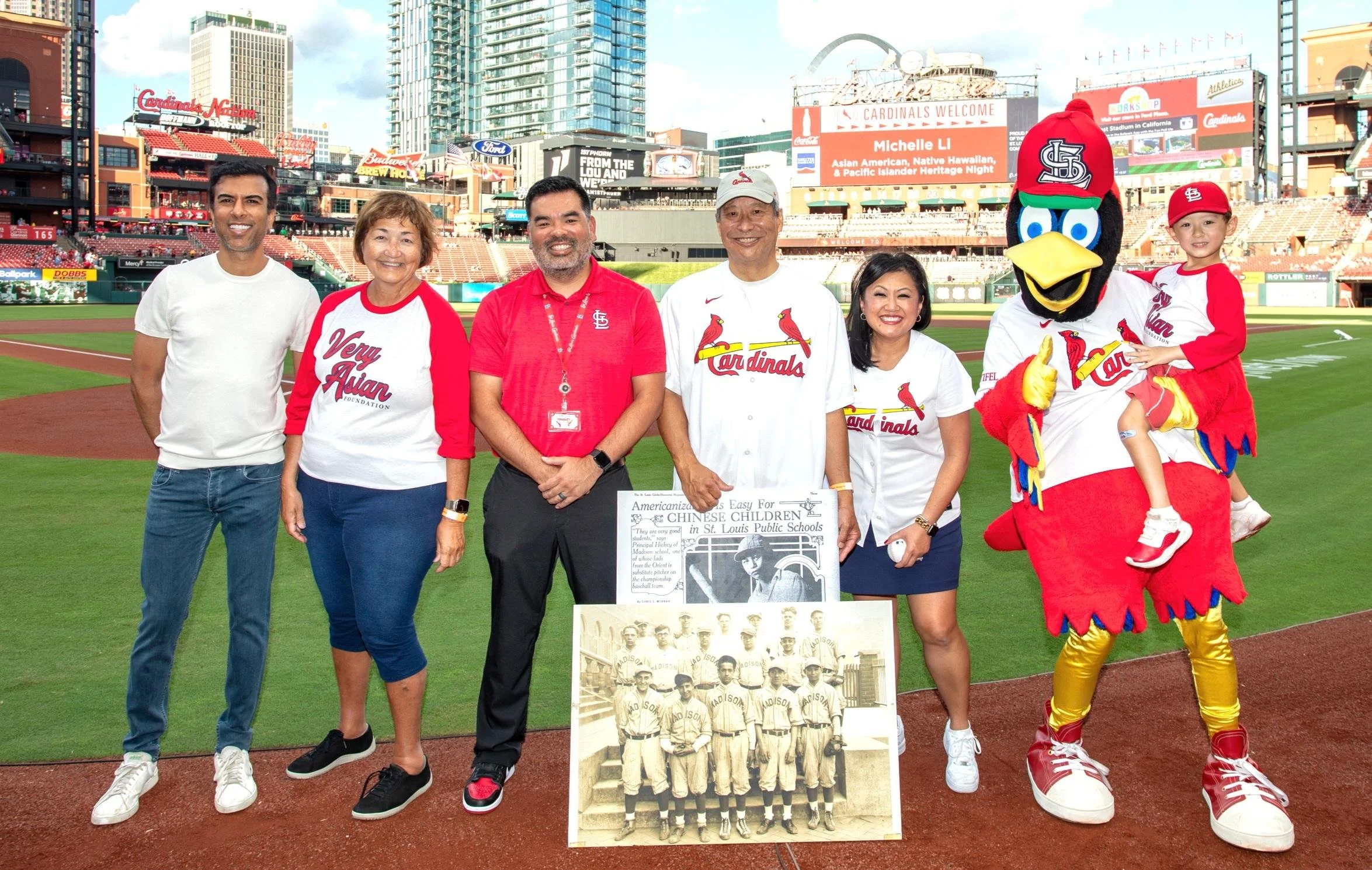
2023 Inaugural Honorees: Soman Chainani, Anna Crosslin, Hosei Haruyama, Me, Michelle Li, Fredbird
Soon thereafter, on May 14, 2026 I was honored to give a specially created presentation to the St. Louis Cardinals, “How Sports Builds Bridges and Creates Opportunities-Selected STL Stories of Chinese American and Immigrant History,” where I wove in some Sports Stories and Trivia.
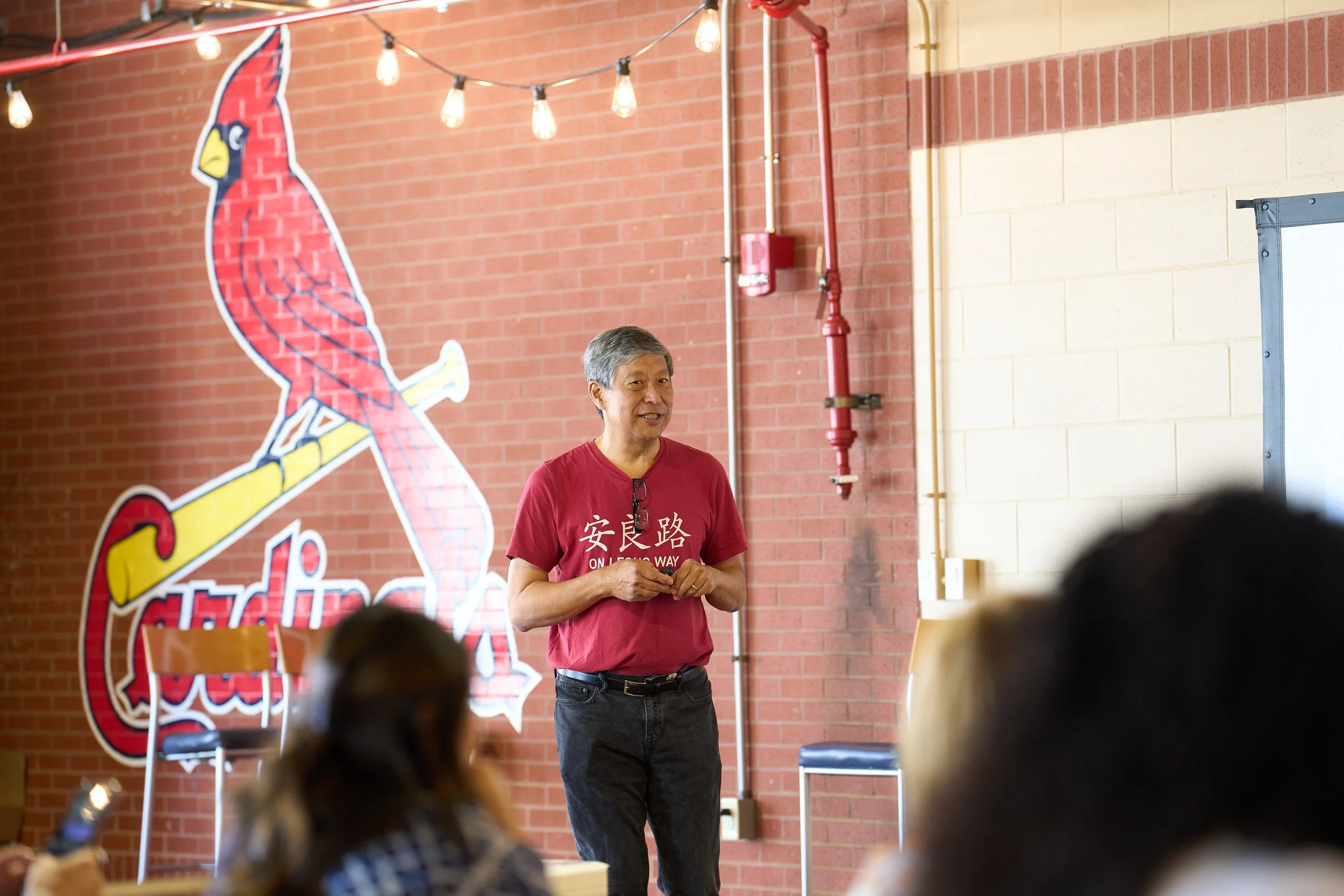
Photo courtesy of the St. Louis Cardinals
Coincidentally, at the 2023 VAF-Cardinals Celebration, I was able to photo bomb the photo with one of those Sports Stories about a Chinese Immigrant Boy and The Great American Game. Read my blog here. [A mention of Hop Leong will make it into the forthcoming new exhibit about Baseball, “STL At Bat,” at the Missouri History Museum.]
Finally (though we have a few more days in May), on May 19, 2026, I joined some of my AAPI Story Telling Colleagues in Jefferson City, MO to provide a presentation to the State of Missouri.
Much like Jeanie Jew, Anna Hui, the Director of the Missouri’s Department of Labor and Industrial Relations, has worked tirelessly to advocate, highlight and celebrate Asian American Heritage and the contributions made in Missouri. Anna is the first American of Asian descent (Chinese American) to serve in the Missouri Legislature (2018).
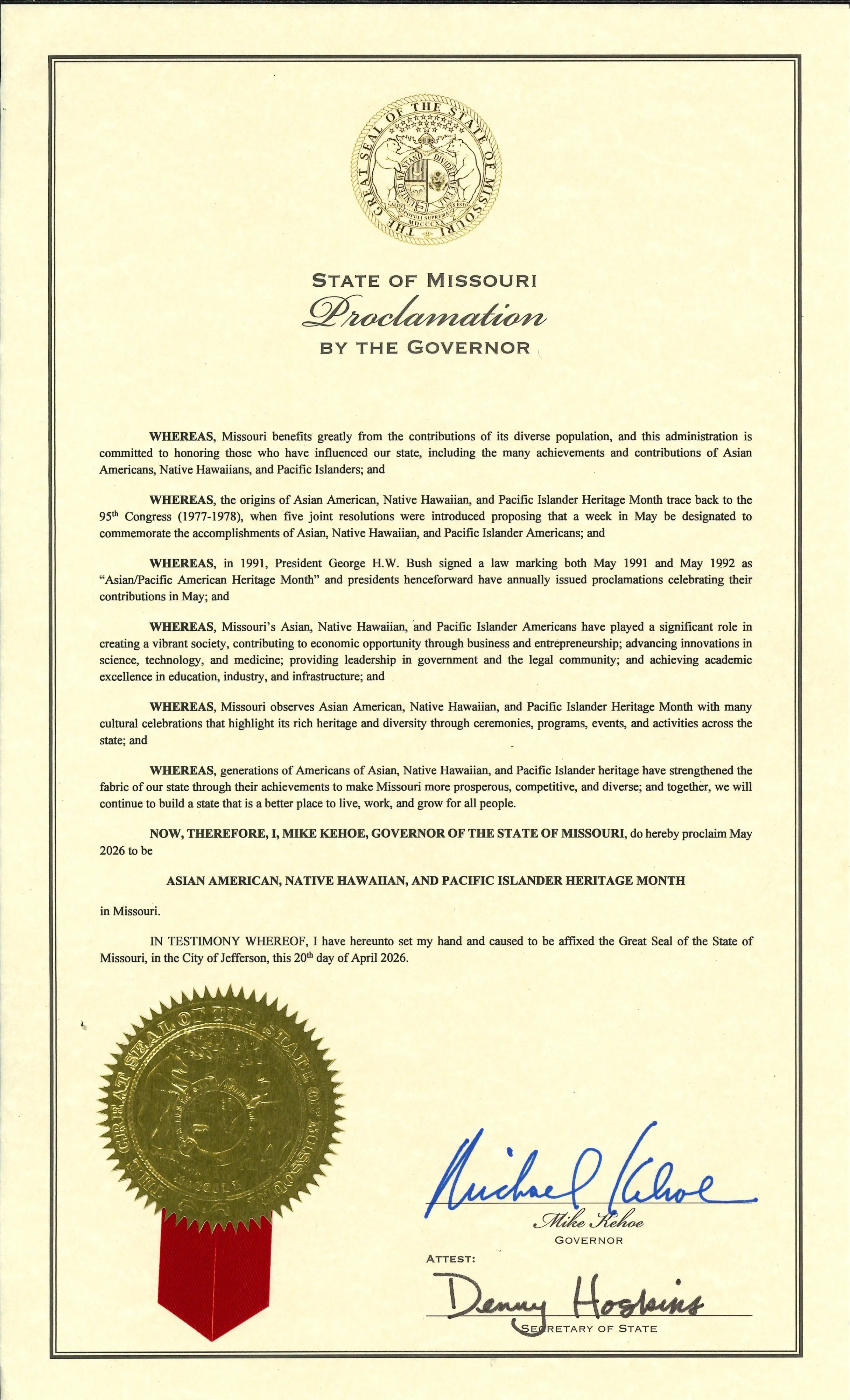
2026 State of Missouri Proclamation
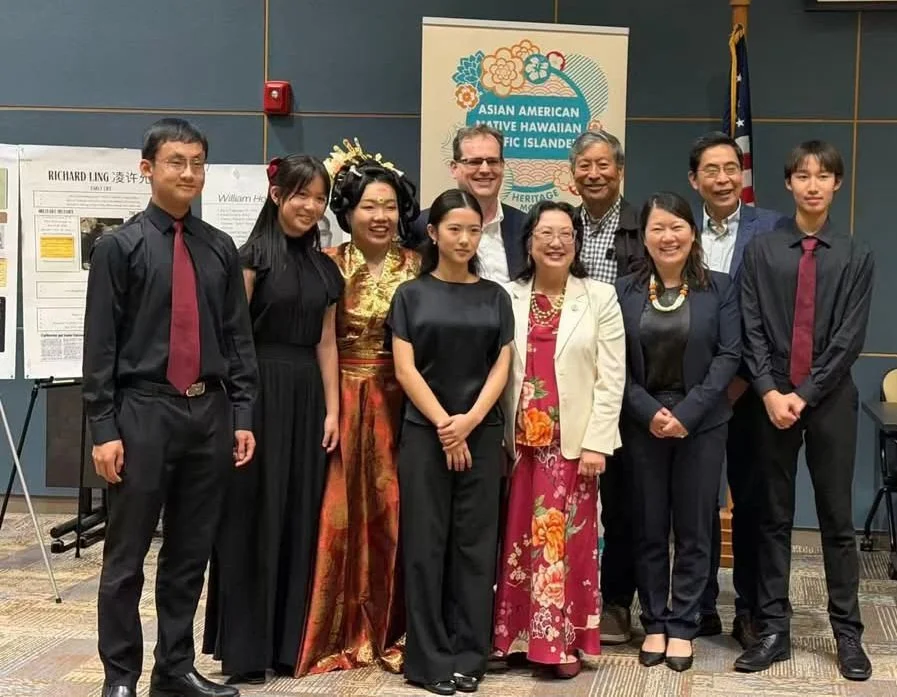
The Presentation Team with Anna Hui (red dress). Photo courtesy of State of Missouri.
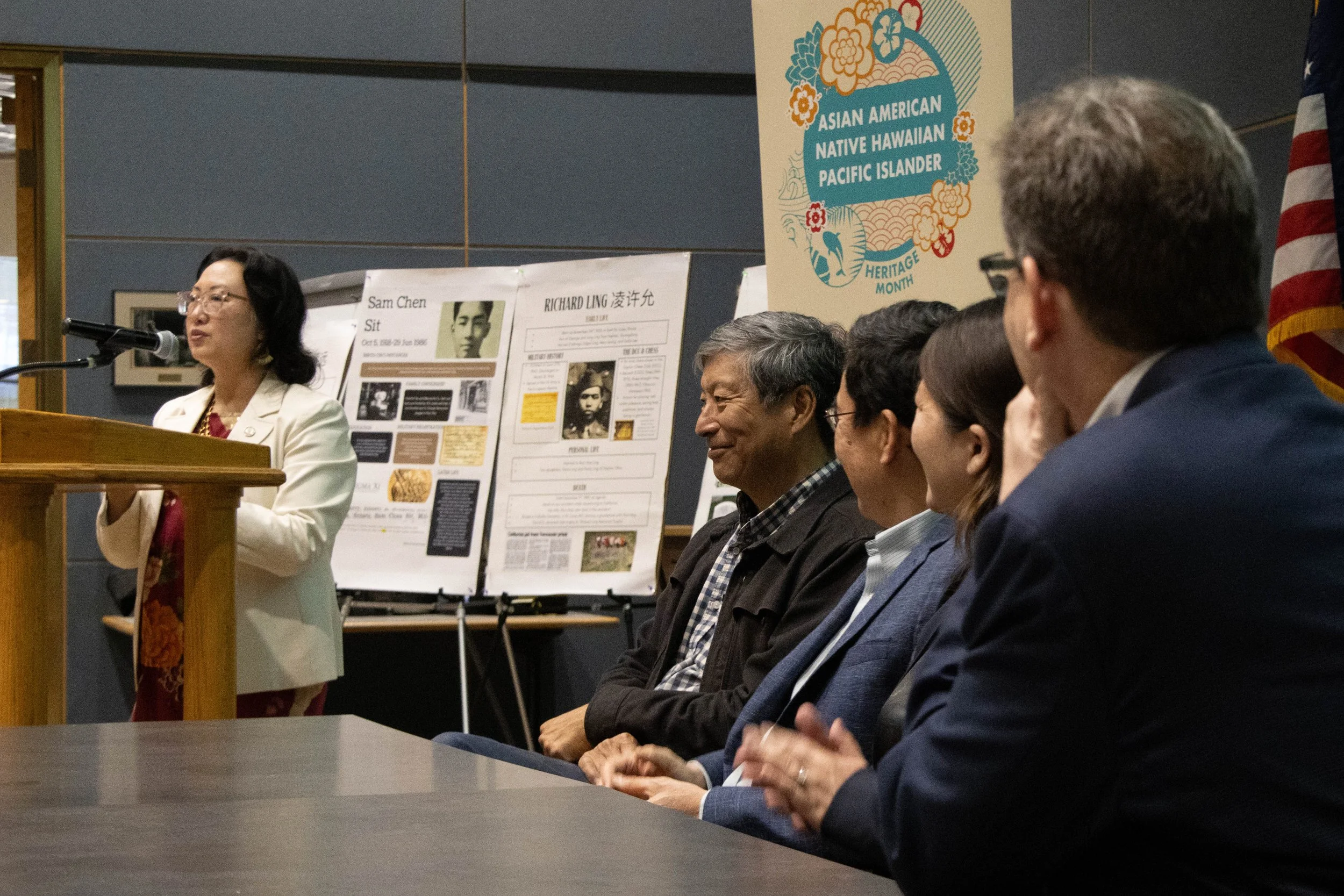
Panel Introductions. Photos courtesy of the State of Missouri.
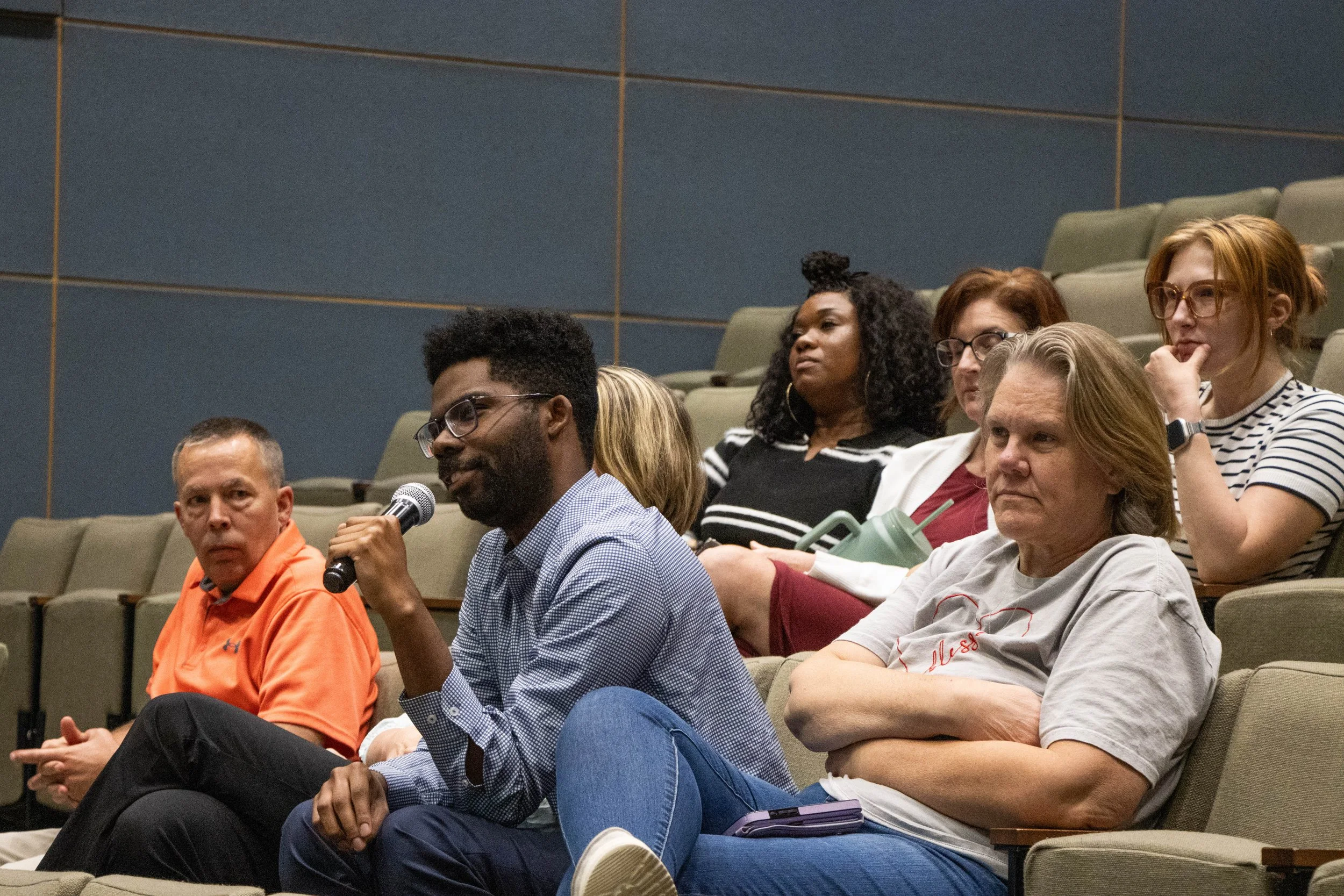
Audience Engagement. Photo courtesy of the State of Missouri.
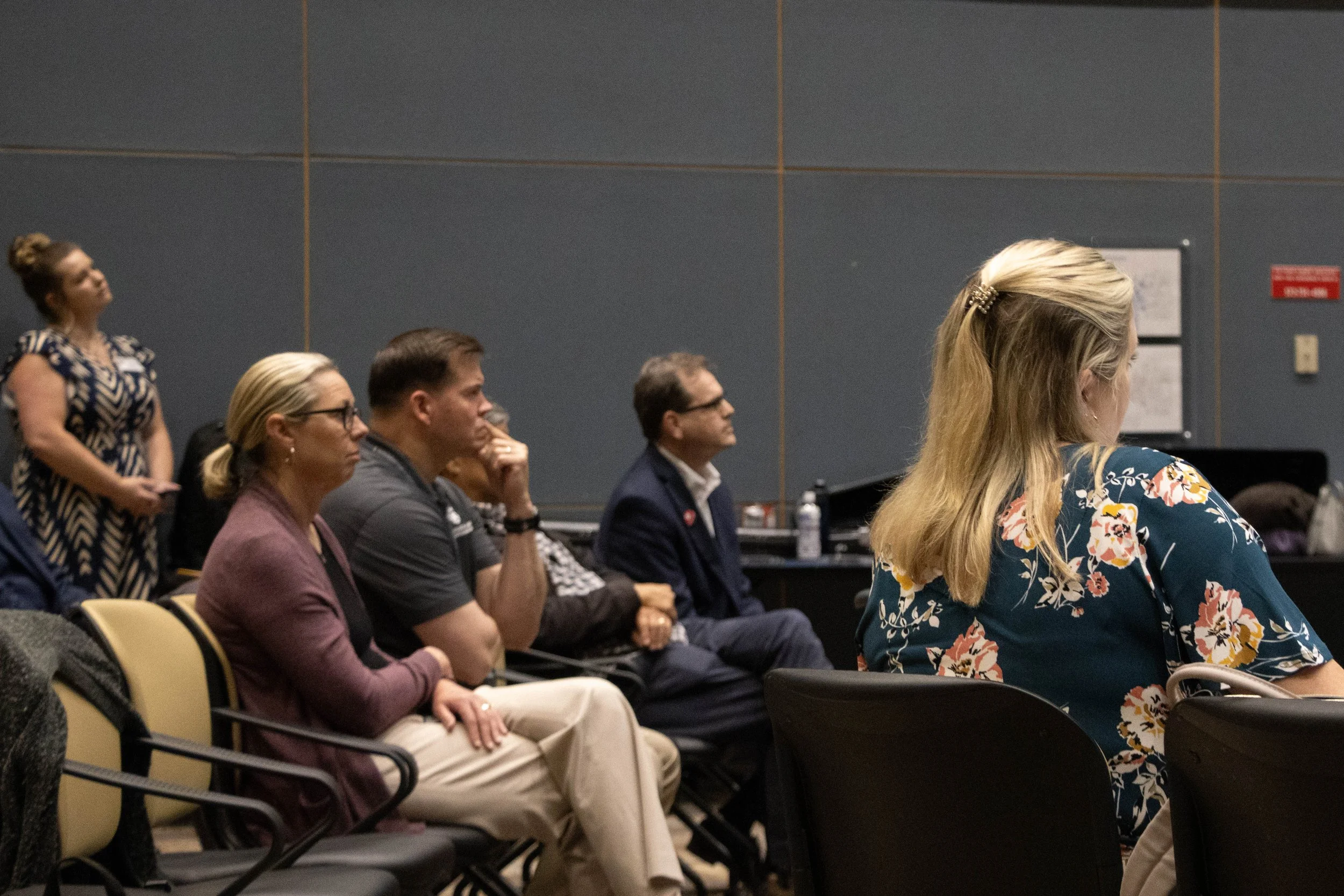
Deep In Thought? Photo courtesy of the State of Missouri.
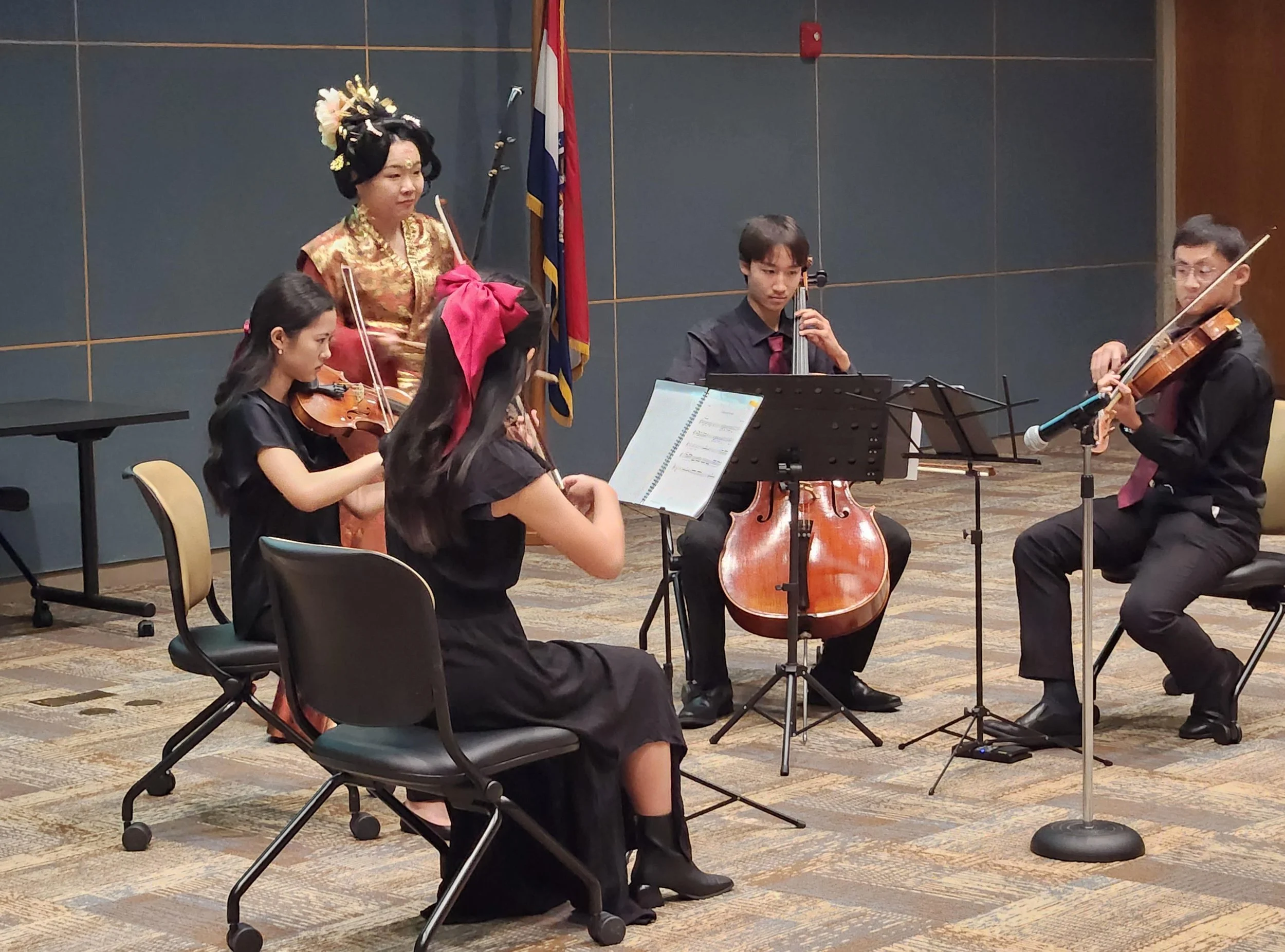
Olivia Rulin Zhang leading members of the St. Louis Symphony Youth Orchestra, blending western and Chinese music together. The National Anthem, no less. (Photo: Peter Tao)
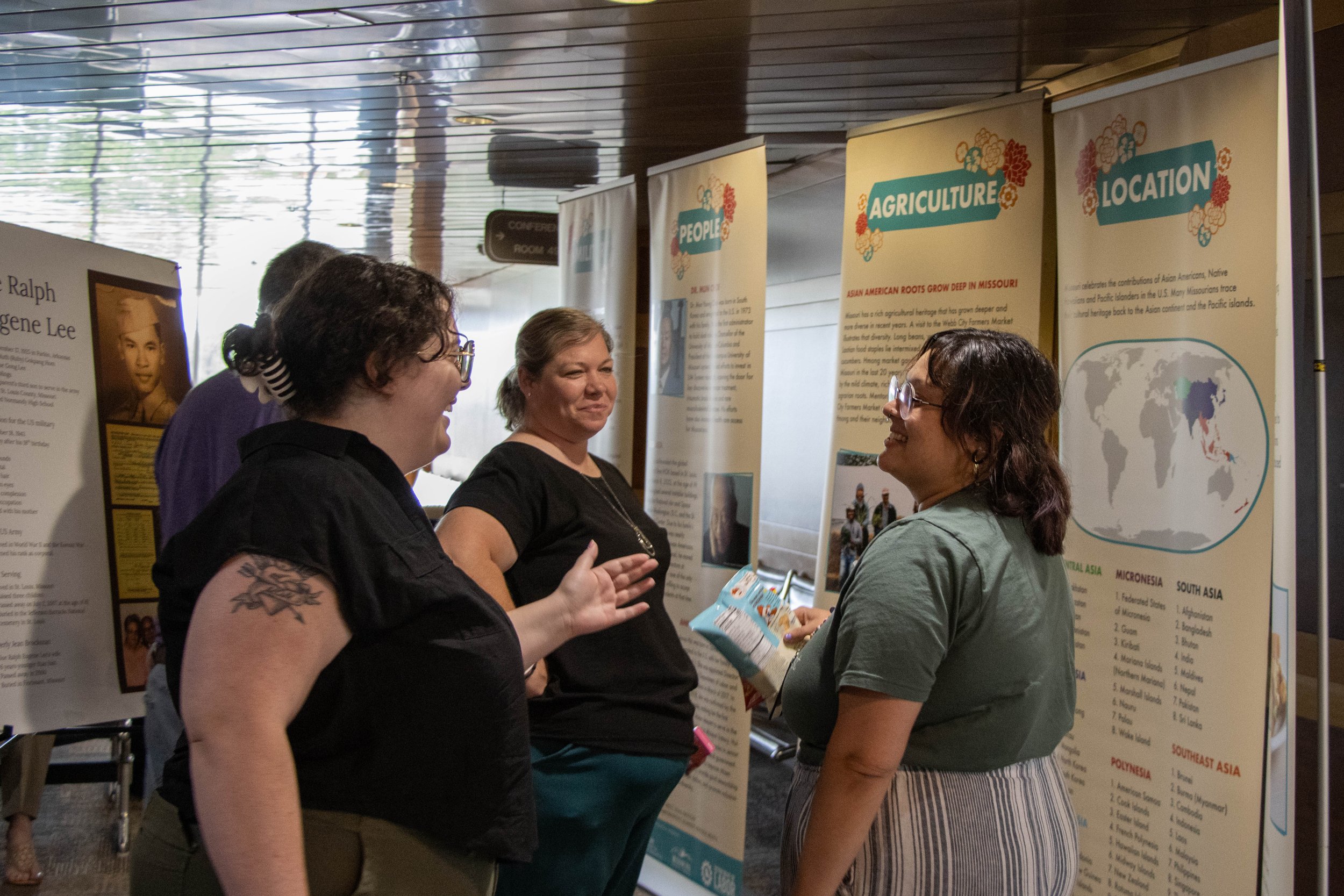
Learning about the diverse history and contributions in Missouri. Photo courtesy of the State of Missouri.
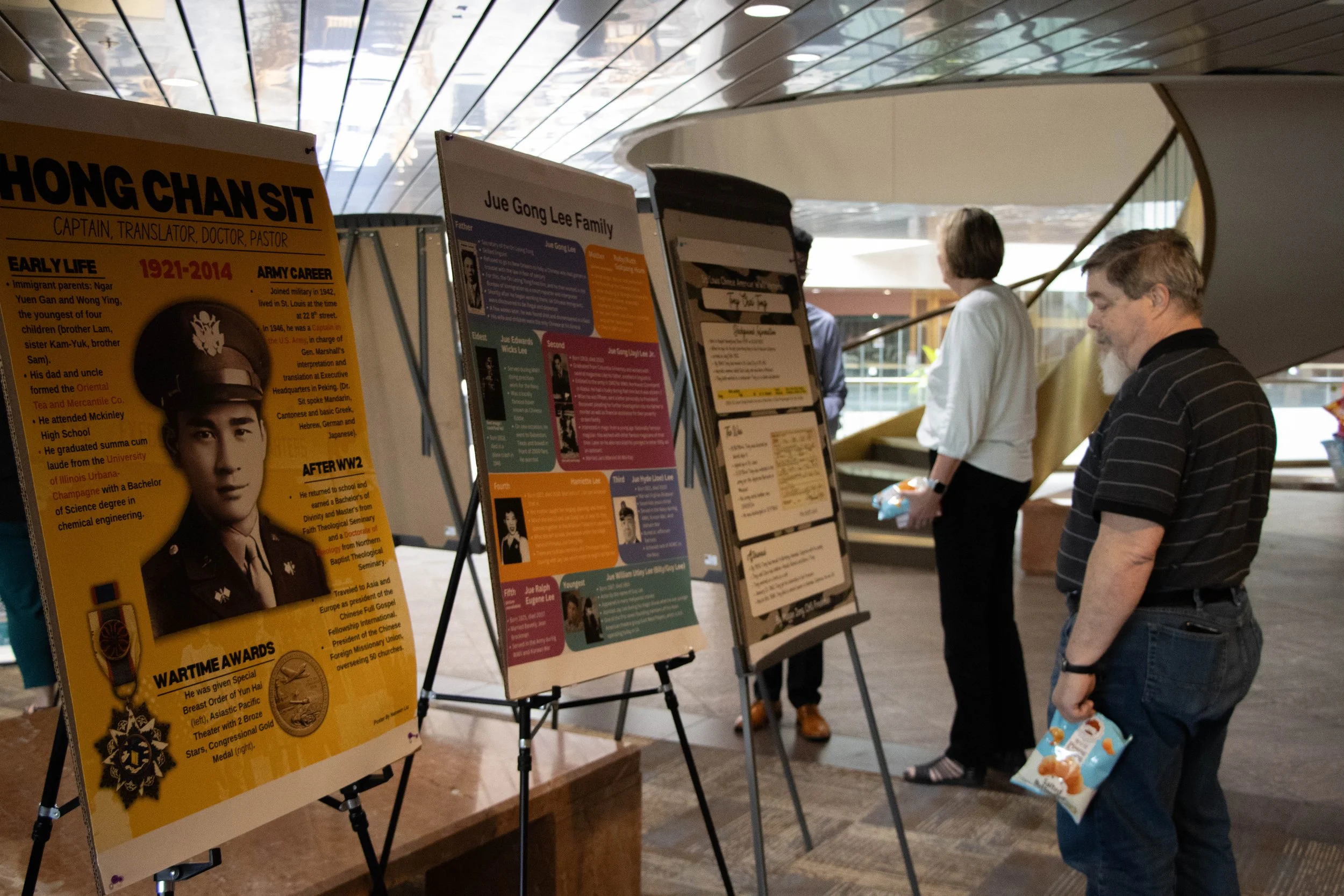
Learning about the diverse history and contributions in Missouri. Photo courtesy of the State of Missouri.
For this year’s celebration at the Capitol, the theme centered around the Chinese American contributions to Missouri. My 10 minutes of fame and introduction slides:
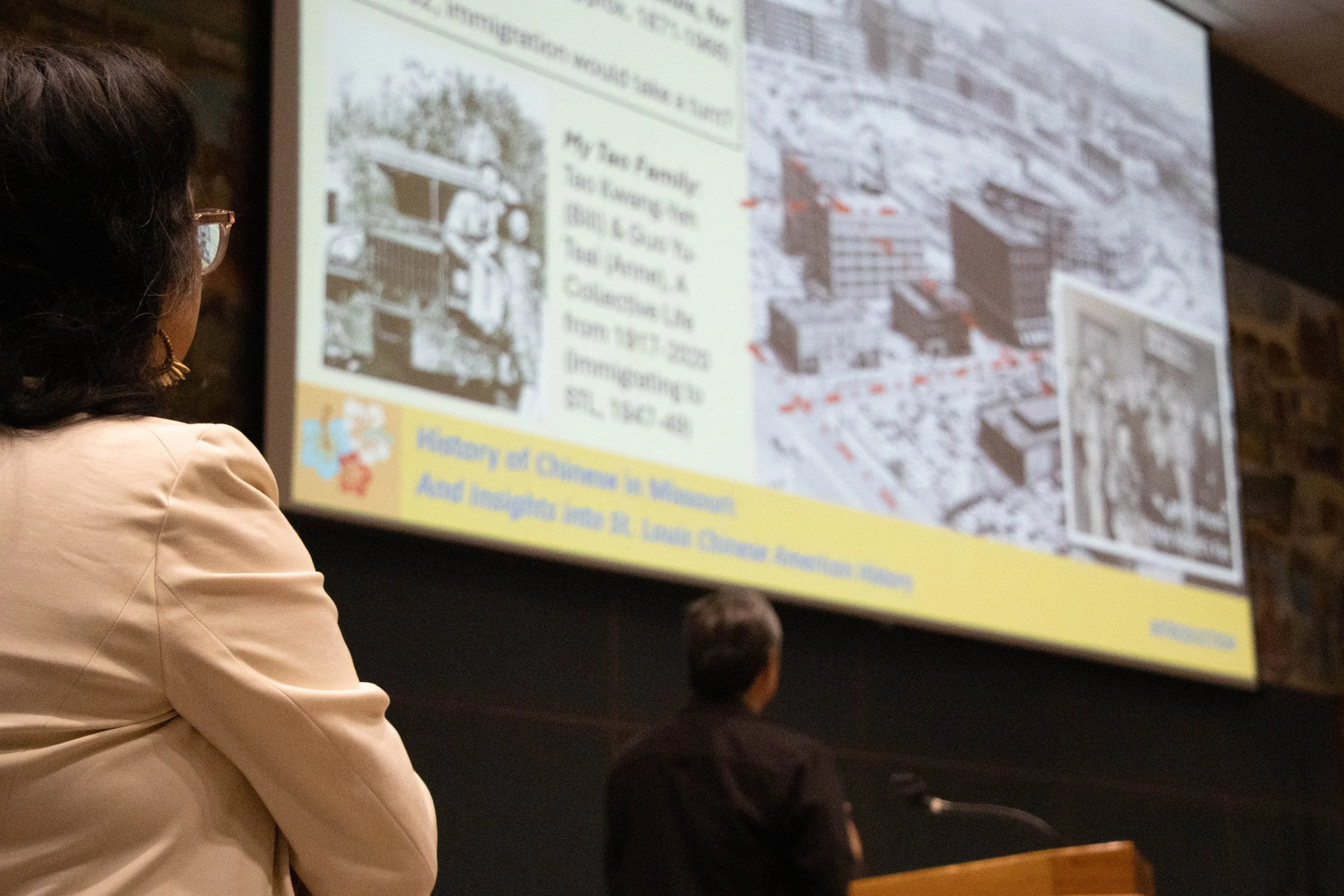
Let the Show Begin!! Photo courtesy of the State of Missouri.


Then some Missouri History Society St. Louis Chinese American History Initiative highlights (and Human Stories) by Christopher Gordon, Director of Library and Collections and myself. Do you have some history for us to share?


Chinese Businesses. Laundries and Restaurants were early contributors to support the economy.

The Story of Hop Leong; An American Story, A Baseball Story, A Boy’s Story

Two Food Entrepreneurs who impacted the St. Louis Agricultural and Food Scenes.

The longest running Chop Suey Restaurant. RIP.
The presentation would continue with Dr. Min Liu and Yimin Zhu, of the St. Louis Chinese Culture and Education Services (CCES), with some historical background on the Chinese Culture Days festival, which celebrated its 30th Anniversary this year.
CCES fosters Chinese culture and heritage to harness the understanding and intrinsic values of diversity, focusing their efforts on producing the Chinese Culture Days program, in partnership with Missouri Botanical Garden.
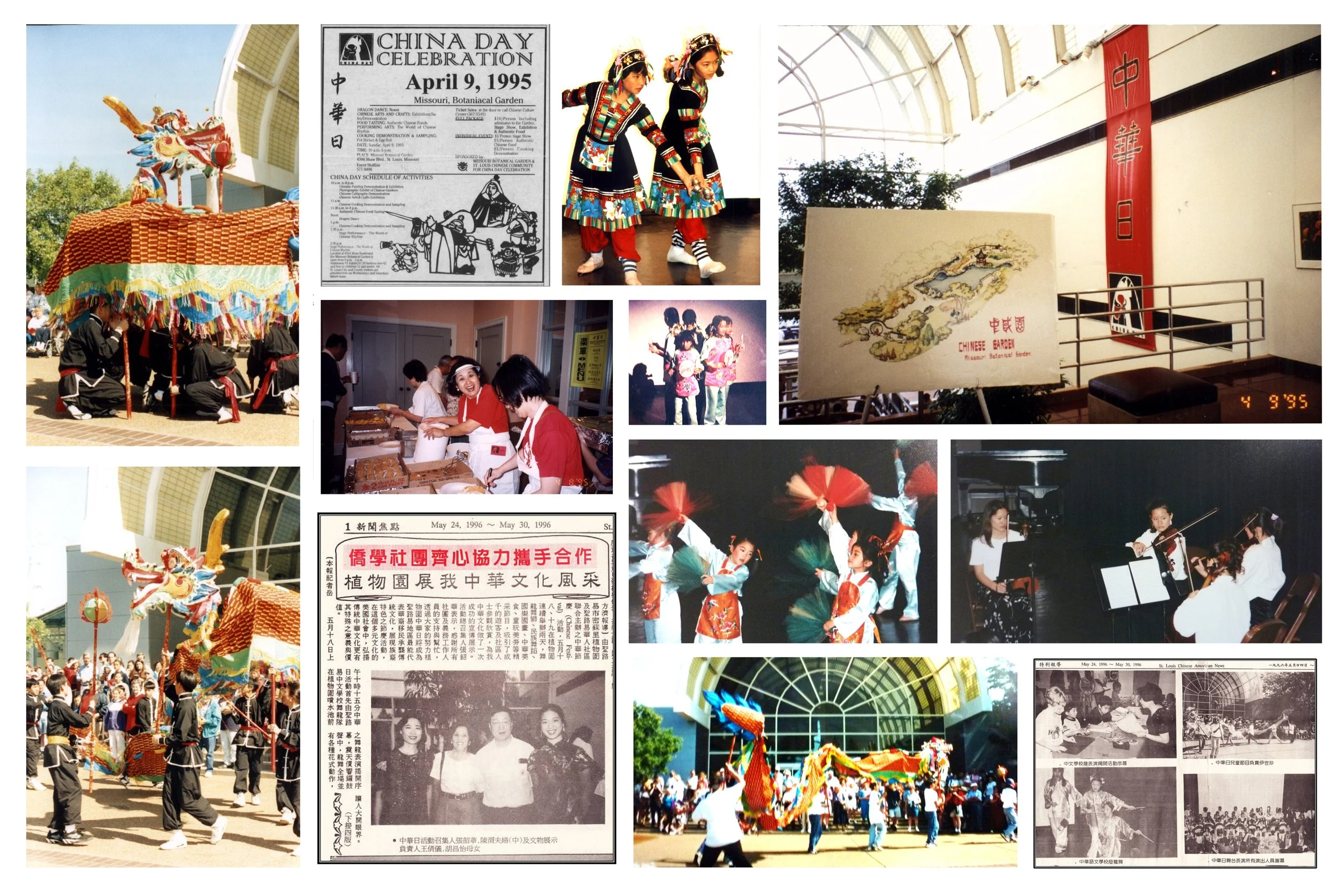
Photo: 1996 Festival, courtesy of CCES.
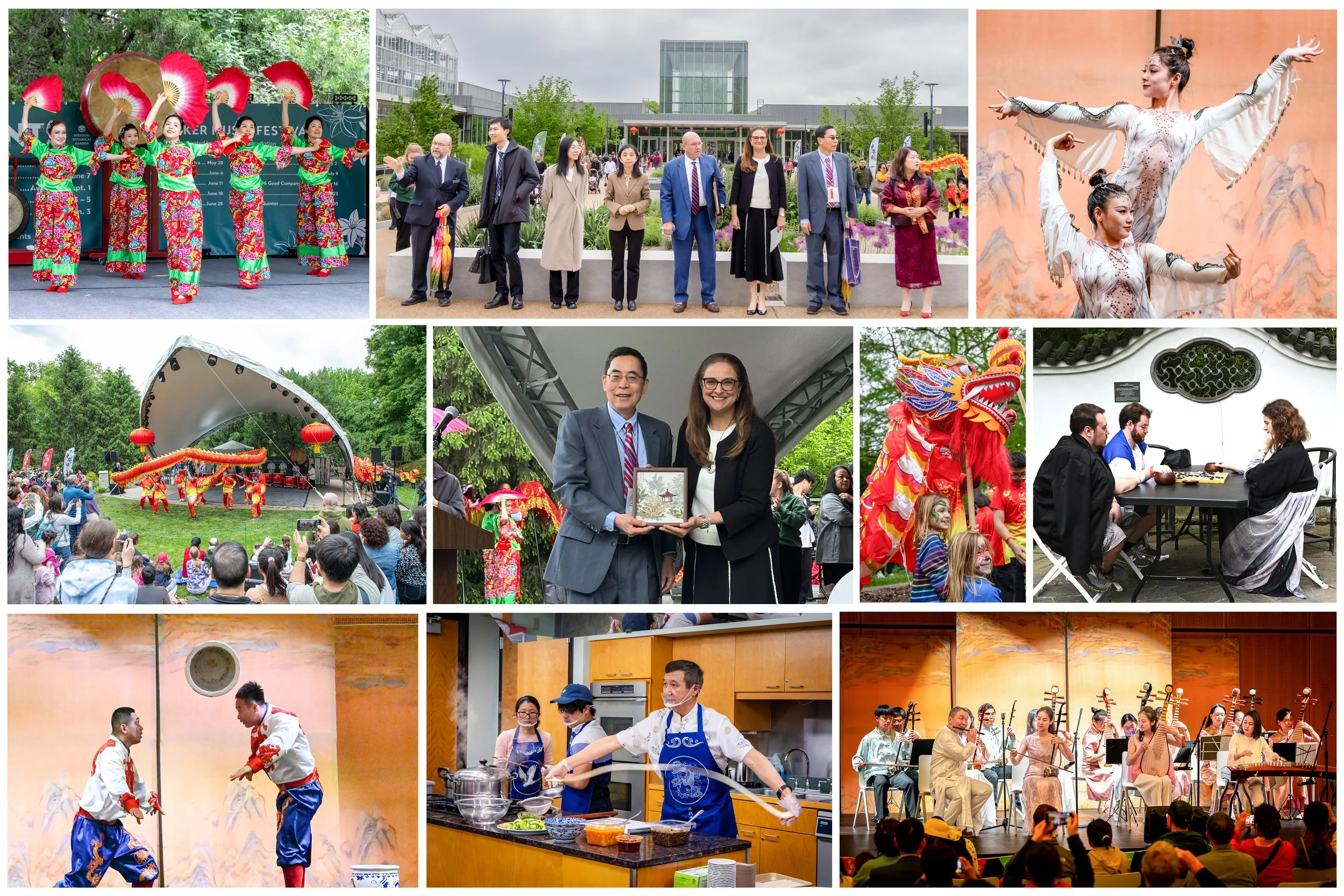
Photo: 2026 Festival and 30th Anniversary Celebration, courtesy of CCES.
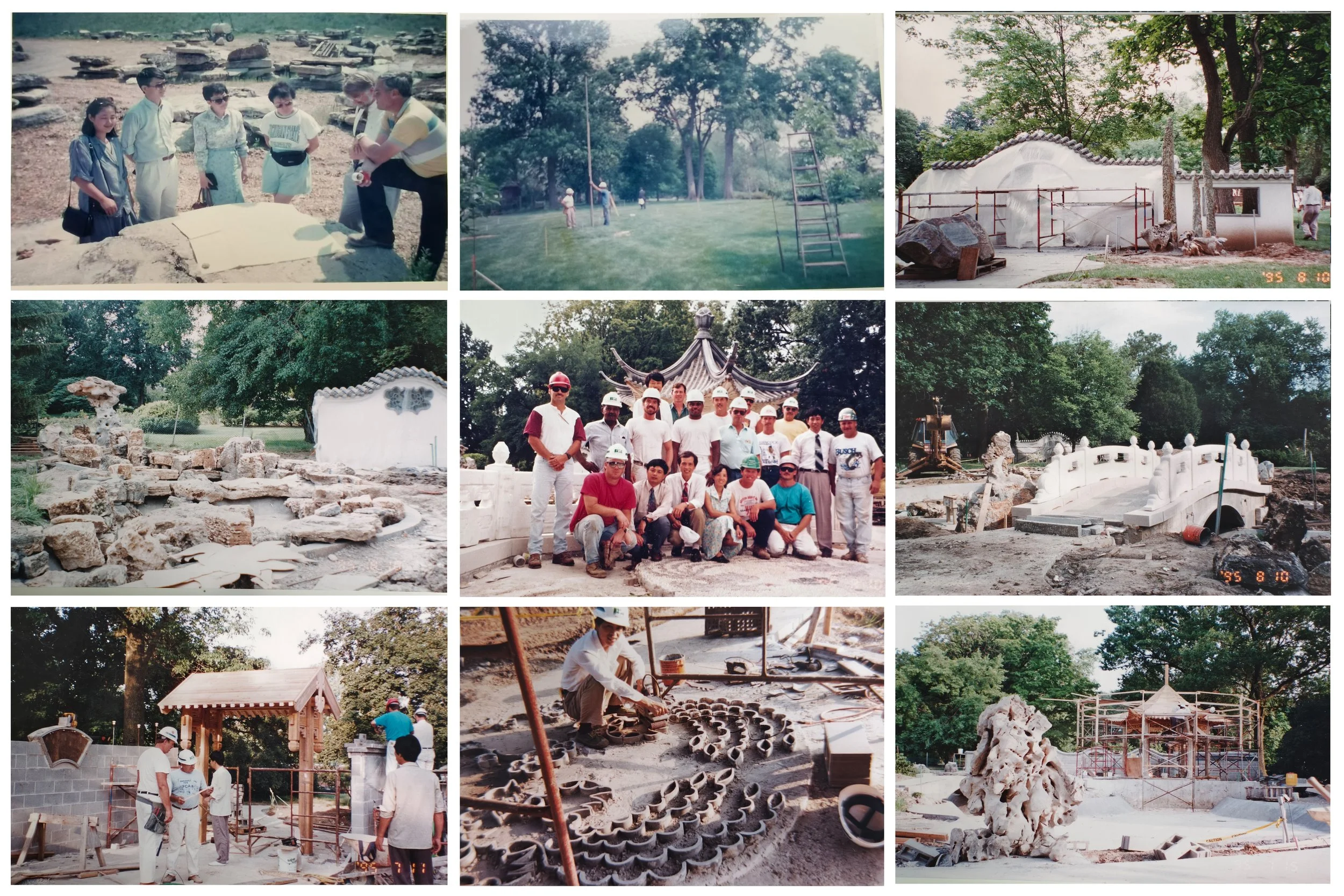
Construction of the Margaret Grigg Nanjing Friendship Garden at the Missouri Botanical Garden. Construction Photos (1996)
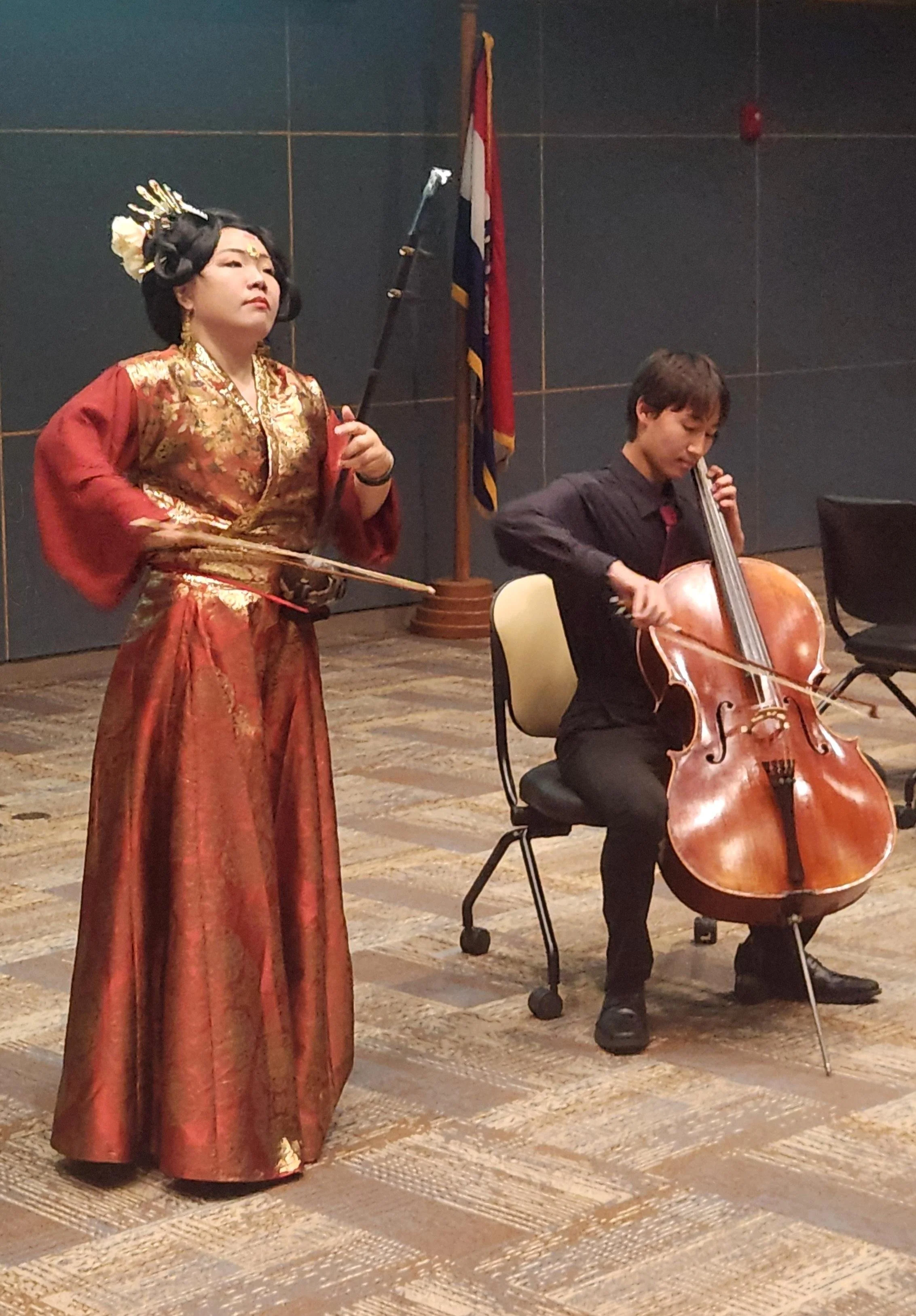
Olivia performing on the Chinese Erhu. Photo courtesy of the State of Missouri.
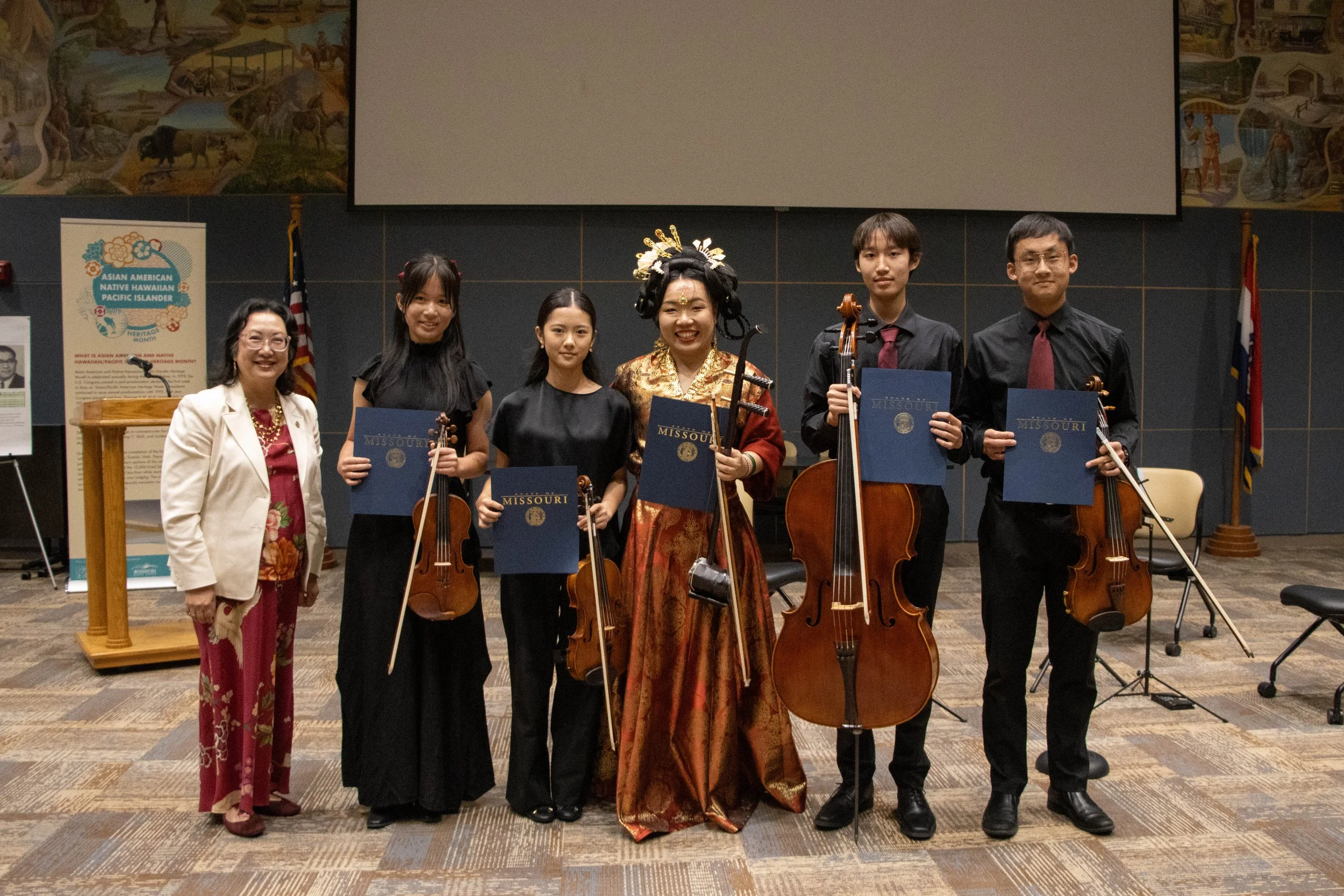
Budding Stars. Photo courtesy of the State of Missouri.
To close, we are all connected in some way: And if we all pitch in to research and share, we may discover facts and stories that will illustrate we are better together and inspire us as we move forward.
Some Months of May connection facts from today’s Blog:
The history of the first Chinese Cultural festival in St. Louis actually dates to May 1983. William and Anne Tao (my parents), close friends with Dr. Peter Raven, were pivotal in advocating for a Chinese representation at the Missouri Botanical Garden; George Wang, Nelson Wu and Anna Lum were also key planners involved.
The St. Louis Chapter of OCA/The Organization of Chinese Americans (now OCA Asian Pacific Islanders Advocates) would be the lead organizer. OCA would eventually handover the torch to CCES and the current Chinese Culture Days festival.
Sadly, Dr. Raven, born in China, recently passed away. I am grateful of the relationship you held with my parents and how you advocated and promoted the Asian American culture. Learn more here:
On May 6, 1973, now 53 years hence, OCA was formed as 1 of 3 founding Chapters. The mission, to advocate and represent Chinese Americans. My father and a small group of leaders would pave the way.
The Washington DC Chapter serves as the National headquarters.
On May 6, 1882, the Chinese Exclusion Act would be signed by President Chester A. Arthur, which is the historical moment (and law banning Chinese) that has been catalyzing the Chinese American Communities throughout the U.S. to promote more awareness and stories about this unjust/unfair law and treatment.
On May 27, 1943, the Magnuson Act would be signed to repeal the Chinese Exclusion Act, which permit some Chinese immigrants to become naturalized citizens. BUT WAIT, THERE’S MORE. It was not as much a breakthrough as it appeared. There was a quota to admit only 105 visas.
While I am grateful that there is a Month of May to focus attention on the great AANHPI contributions made in and for the U.S., we don’t have to only care 1 out of 12 months. Speak Up and Share your Stories every day.
#AANHPIHeritageMonth
#AAPIHeritageMonth
#ChineseAmericanHistory
#ImmigrantsMakeAmericaGreat
#VeryAsian