All I Want For Christmas …is to Send Henry Lang to the HALL OF FAME
WINTER (AND CHRISTMAS) IS UPON US….
And the topic of Baseball is still in the air. Whether it be the recent completion of the World Series, the media frenzy about trades and deals at the MLB (Major League Baseball) Winter Meetings in Orlando or the buzz on who is worthy to be included in the next select group for the 2026 MLB Hall of Fame (HOF).
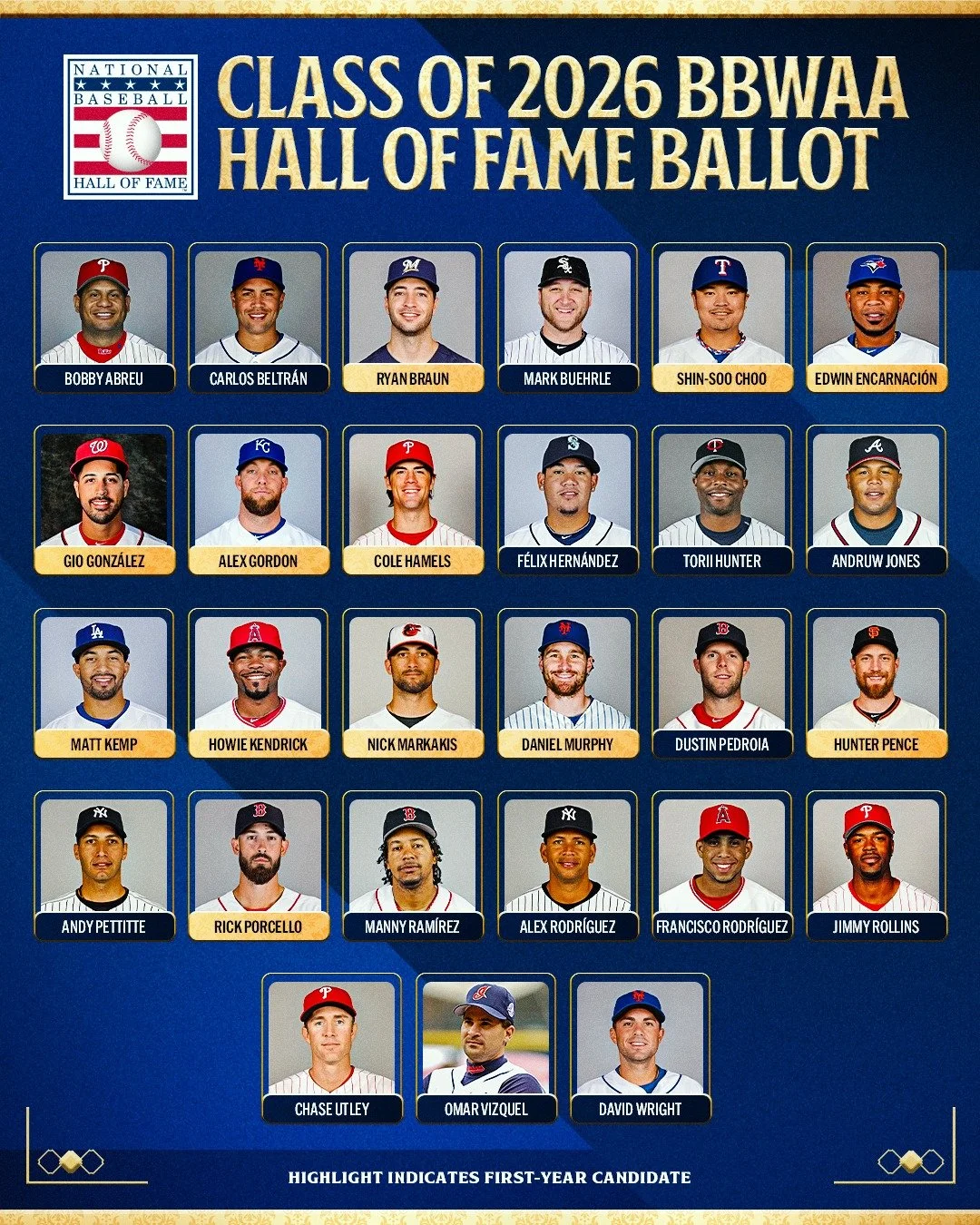
The Hall of Fame!!! Who Else Should Be On This Ballot?
First, speaking of the World Series, did you know that the World Series MVP was Yoshinobu Yamamoto, the lesser know counterpart and teammate of the truly superman, Shohei Ohtani? Now, that’s a (Japanese) Asian Dynamic Duo! Let’s give them an applause.
So, what does this have to do with a guy named Henry Lang? I’ll get to that after some background.
This collision of recent baseball actvity reminded me that in professional baseball news and statistics, we mostly resonate with news of our current times or era. Who will win the sweepstakes and bidding war for the next “Asian Sensation?” Will he be from Japan, South Korea, Taiwan….or, what about China?
Do Chinese Play Baseball?
In the case of baseball, our ‘historical” knowledge of which Asians are playing baseball or even know how to play baseball, is somewhat limited to what MLB presents to us. Many people think it is only a modern era phenomenon. But, yes, Chinese and other Asians play baseball….and love it.
Some MLB Fun Facts: Harry Kingman (not Asian) was the first player born in China to join the MLB in 1914; Bobby Balcena was the first Asian American (Filipino-American) to enter this elite group in 1956; Masanori Murakami (first Japanese) in 1964; Chan Ho Park (first South Korean) in 1994; Chin-Feng Chen (first Taiwanese) in 2002.
More MLB and STL Favorites: Then, the 1990s would open the door to a steady supply chain (it is a business after all), including my STL favorite, So Taguchi (Japanese). I still like you Lars Nootbar (Japanese mother) and Tommy Edman (Korean mother). And though he did not play long in STL, I did like Seung Hwan Oh (a Korean baseball legend) and aptly nicknamed “The Final Boss” and “Stone Buddha.” Asians have great nicknames!!
STL Fun Fact: Did you know that the St. Louis Cardinals currently have Asian Americans on the team? In addition to Lars Nootbar, we have Riley O’Brien (Korean descent) and J.J. Weatherholt (Korean descent). Recent former Cardinals, in addition to Tommy Edman, were Tommy Pham (Vietnamese descent) and Kolten Wong (Native Hawaiian, Chinese, Filipino descent)
MLB, but not the Majors: A Chinese-American with an inspiring story about perseverance and commitment is Ray Chang. Like many sport (and boyhood) dreams, his career and pursuit of reaching the majors was cut short due to injury. However, this did not stop his goal to have a Chinese player reach the MLB Majors. Have a look at this website and trailer, The Great China Baseball Hunt, to learn about the story of Ray.
But did you know baseball was introduced to Asians (mostly notably the Japanese and Chinese) back as far as the 1800s? The Shinbashi Athletic Club (Japan, 1878) and the Shanghai Baseball Club (China, 1863) were the early experiments, introduced in 1872 by an English professor, Horace Wilson in 1863 and by a missionary, Henry William Boone, respectively.
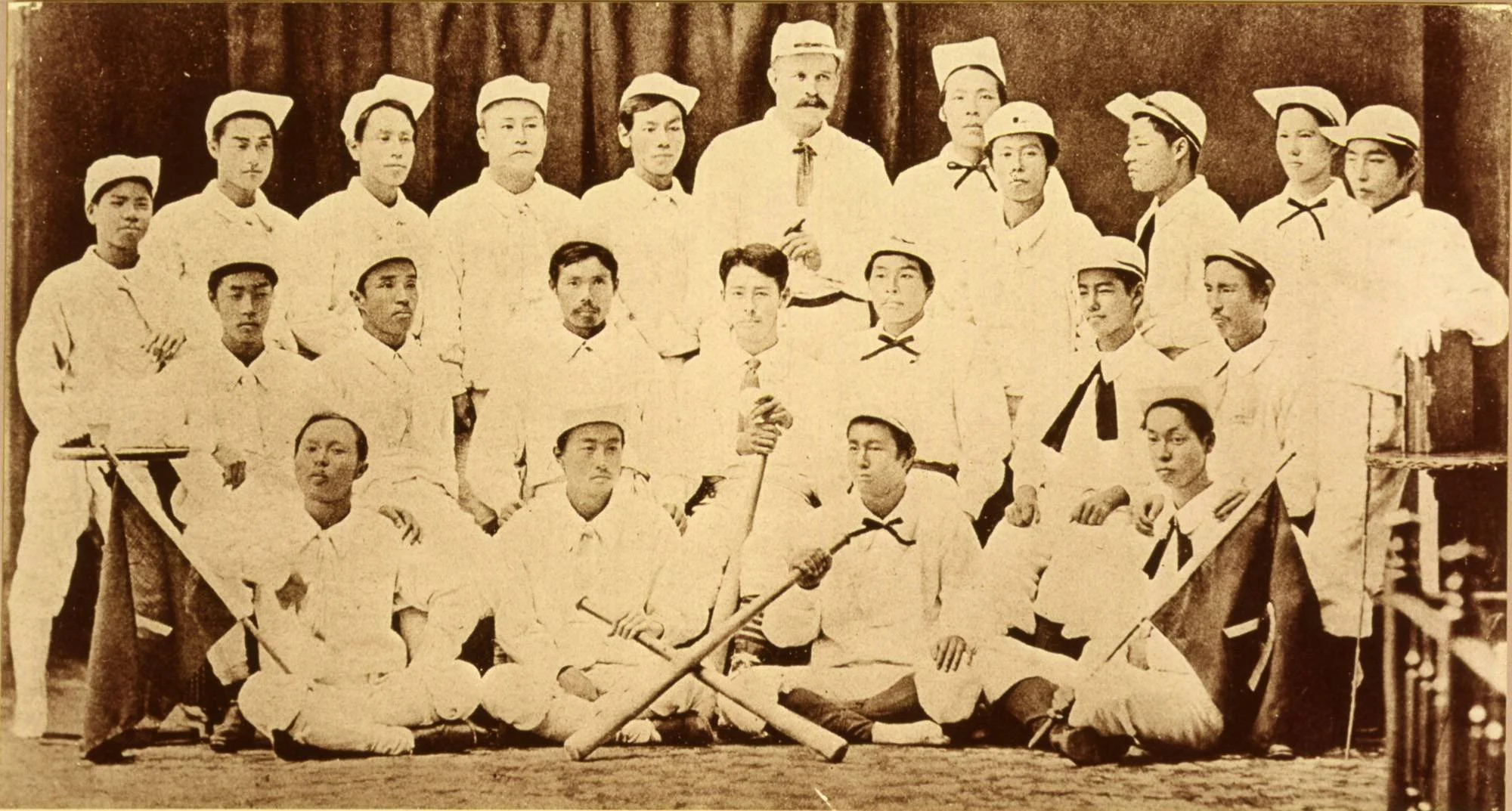
Shimbashi Athletic Club, 1878
Jumping across the Pacific to the U.S., there were some notable young Chinese (eventual Chinese diplomats) who would get introduced and become proficient and grow a fondness of the game here.
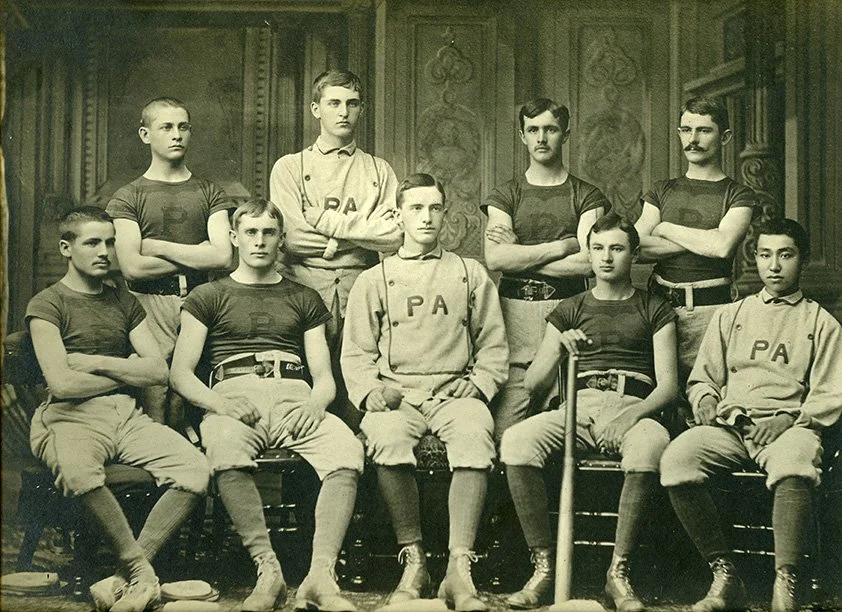
Phillips Academy - Andover Baseball Team. (Photo: Phillips Academy, 1881)
Liang Cheng (1st row, right) would come to the U.S in 1875 at the age of 12, as part of a China-U.S education exchange program, the Chinese Educational Mission (CEM), and would become a baseball star. He was studying in Amherst when the CEM was recalled; the program was prematurely ended because the Chinese students were becoming too Americanized.
Upon returning to China, Cheng would eventually serve in the Chinese Embassy to the U.S in 1885 and as Chinese minister to the U.S from 1903-1907. He was even (honorary) knighted as Sir Chentung Liang Cheng by Queen Victoria in 1897.
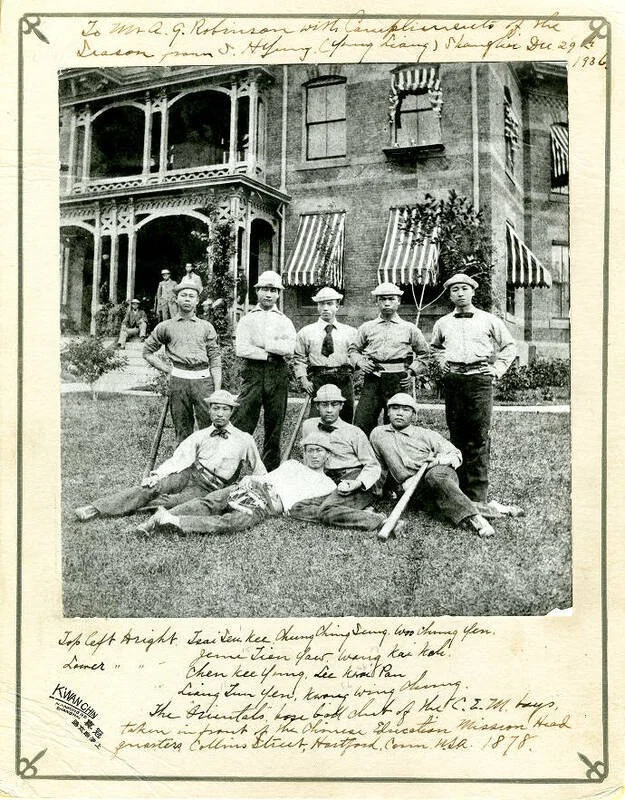
The “Orientals” baseball team in front of the Chinese Educational Mission. (Photo: Phillips Academy, 1878)
Also on the CEM program was a young, Wong Kai Kah (2nd row, right), who would serve as the Chinese Imperial Vice Commissioner to the Louisiana Purchase Exposition (aka 1904 World’s Fair) in St. Louis. There are accounts of him playing baseball with children at his residence in St. Louis, on Goodfellow Avenue.
The fascinating history and stories about the Chinese Educational Mission can be found on the Phillips Academy website here.
And finally, who doesn’t like this 1919 photo of Lee Wong, covering baseball for a local newspaper and using a telescope?
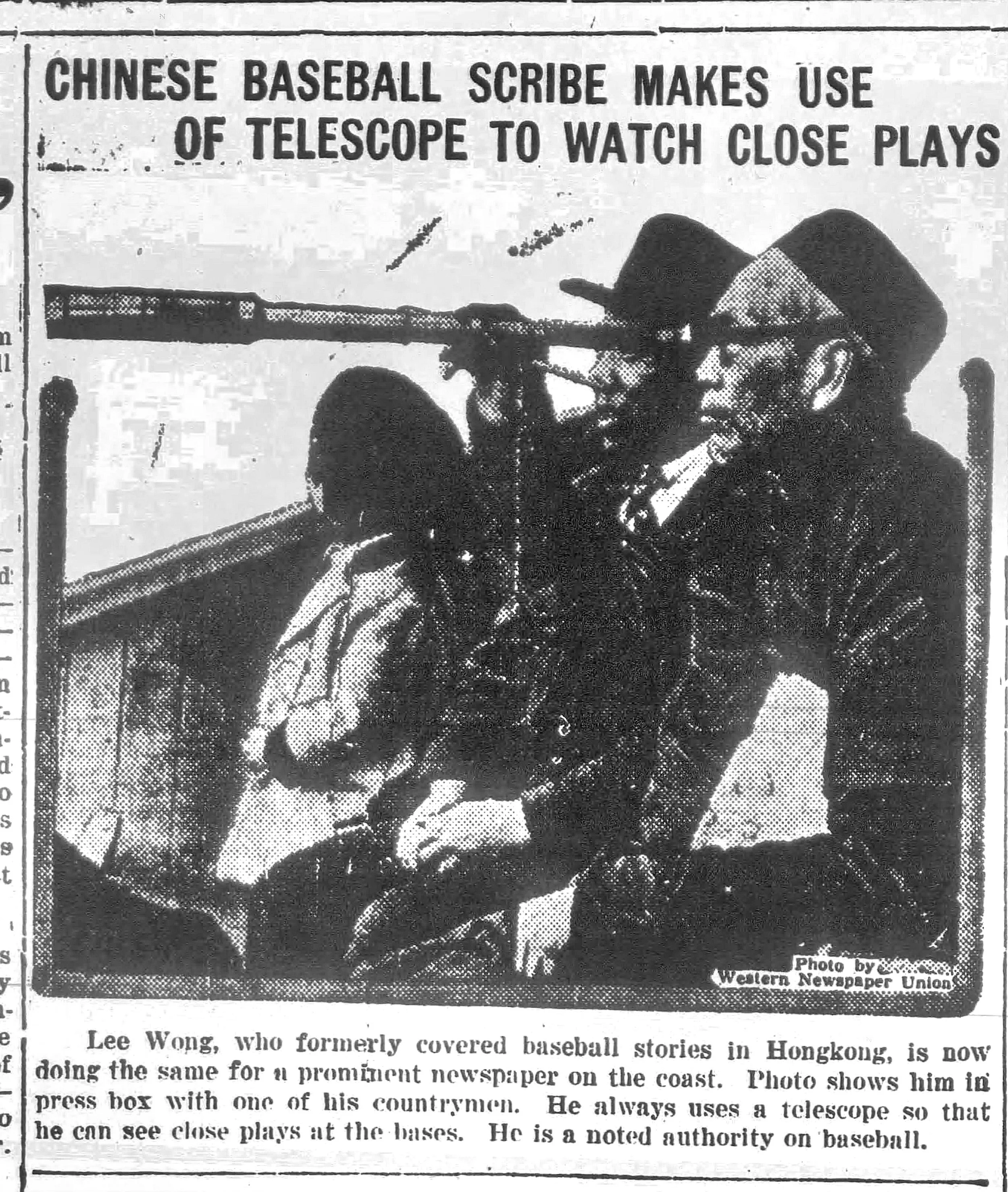
(Photo: Evening Public Ledger, 1919)
U.S. Baseball (and Sports) Fun Fact: Did you know there was a baseball team of mostly Native Americans that was started in 1897? Baseball provided an outlet for Native Americans to “assimilate,” as well as many immigrant groups. Whether these groups of people were truly accepted into society, baseball (and sports) has historically been a path for opportunity.
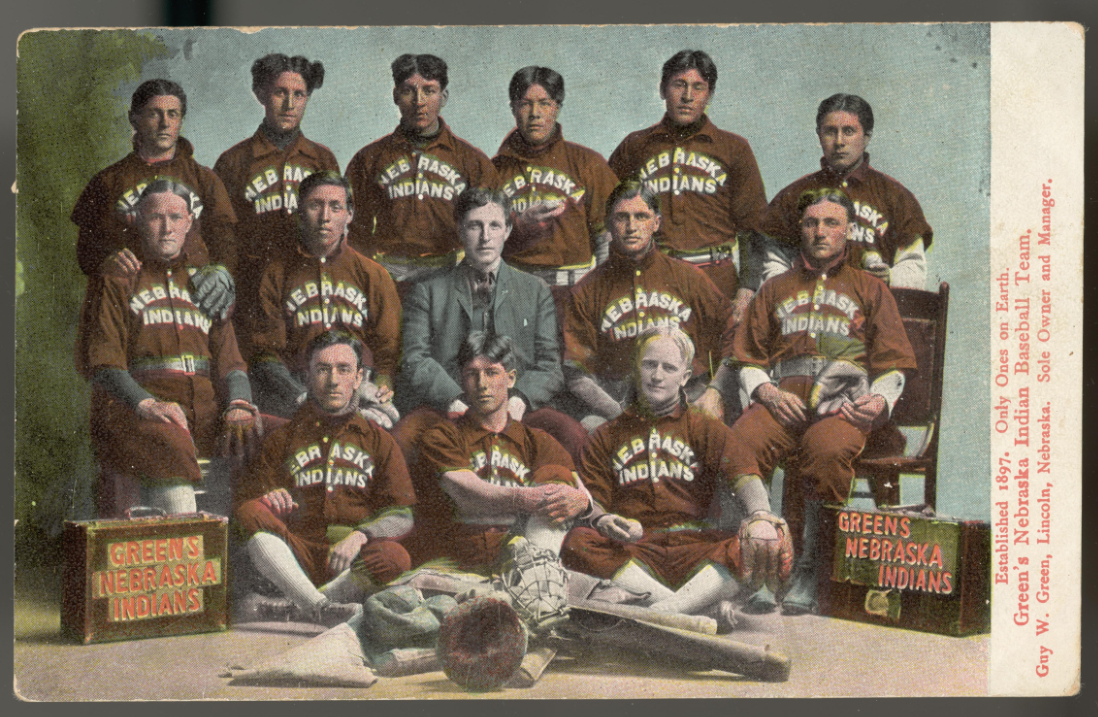
The Nebraska Indians (Photo: Nebraska State Historical Society, 1905)
An Asian (Japanese) American connection to the Indians, but a story in itself to be told later, is that of Tetsu (Tom) Uyeda, who came to the U.S. in 1904 and would make it to St. Louis by 1912. He too loved baseball and attempted a brief career while in the Japanese Leagues in California. His tragic history would include being incarcerated during the U.S’s dark history and treatment of Japanese Americans.
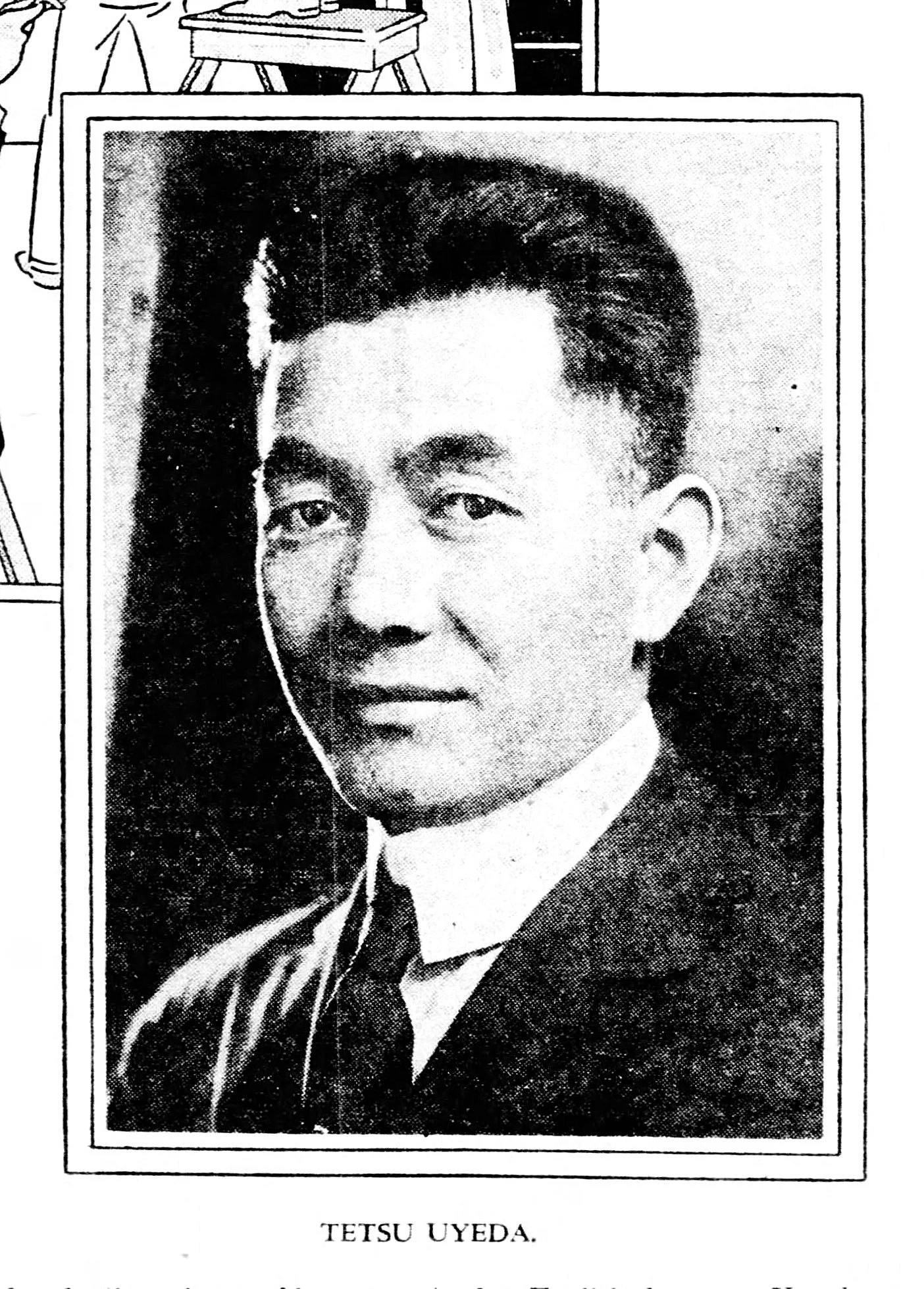
Photo: St. Louis Post-Dispatch. February 11, 1935
Send Henry Lang to the MLB Hall of Fame
With the above highlights and insights into some Asian Baseball History and the U.S., I now present my case for a young boy who I believe should be inducted into the MLB Hall of Fame.
Simply stated, Baseball gave this young, immigrant Chinese boy hope.
Baseball broke down the social and cultural barriers.
The American pastime of Baseball fulfilled his American Dream.
This American Dream was so impactful, that this boy, Hop Leong, unofficially changed his name to Henry Lang, so that he could be included as an American.
The following is a reposting (with updates) of my nearly 4 year old blog written for the Missouri Historical Society’s St. Louis Chinese American History Initiative, where I am the Chair of the Advisory Group. It has been slightly updated for this new Blog.
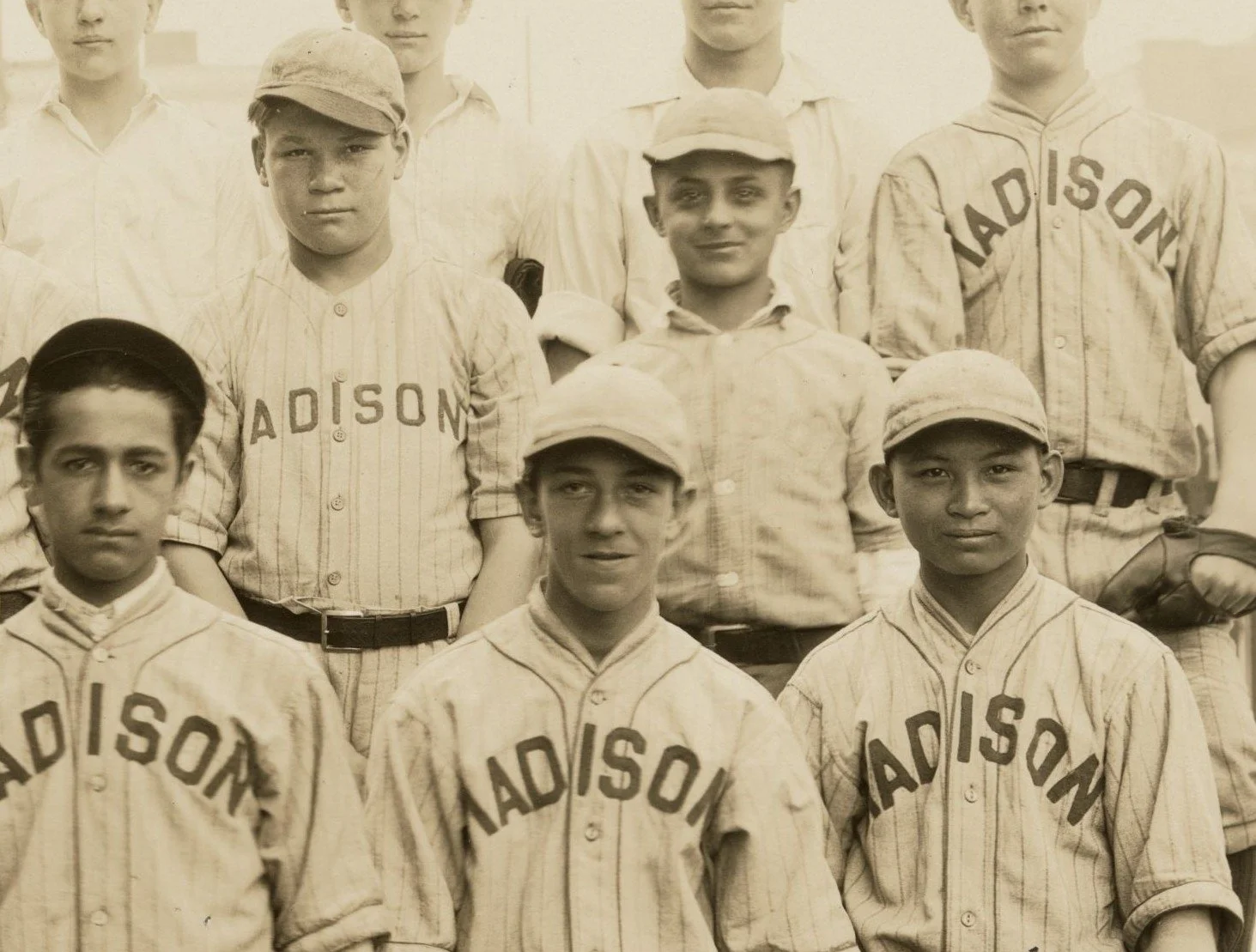
A Chinese Boy on the Right?
Growing up can be tough.
Middle School is definitely tough.
And when you add to this the other influencing factors to growing up, such as family expectations, societal norms and adolescent peer pressures, it makes you wonder how did we ever survive?
Hop Leong, a young boy in St. Louis, surely had these pressures. But were his pressures even greater due to his circumstances or was he viewing and experiencing his new homeland with a different lens?
You see, Hop Leong was not from St. Louis originally. Actually, he was not from this country. As a first-generation immigrant born in Canton, China, his father located to St. Louis in 1923 when he was at the young, impressionable age of 9. His mother and siblings remained in China. It is unclear why Hop was the chosen one. Note: It is unclear if Hop was 9 or 10 years old. In traditional Chinese tradition, the birth year begins with Year 1.
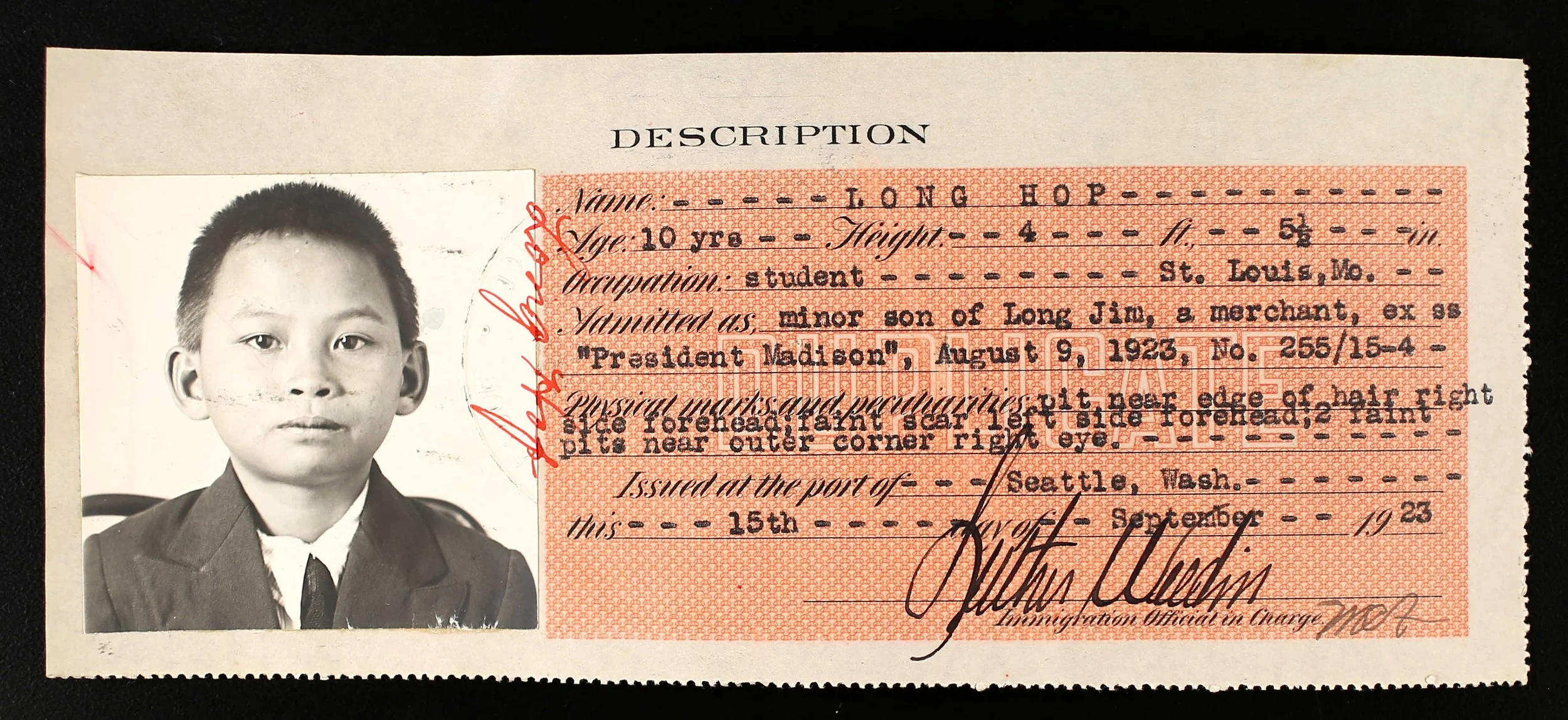
U.S. Certificate of Identity
Like most early Chinese settlers to St. Louis, they flocked to downtown’s small Chinese community, in an area bounded by Market, Walnut, So. 7th and So. 8th Streets, an area that became known as St. Louis’ Chinatown.
Hop would live in the building at No.18 S. 8th Street, the only building known to have a Chinese style roof.
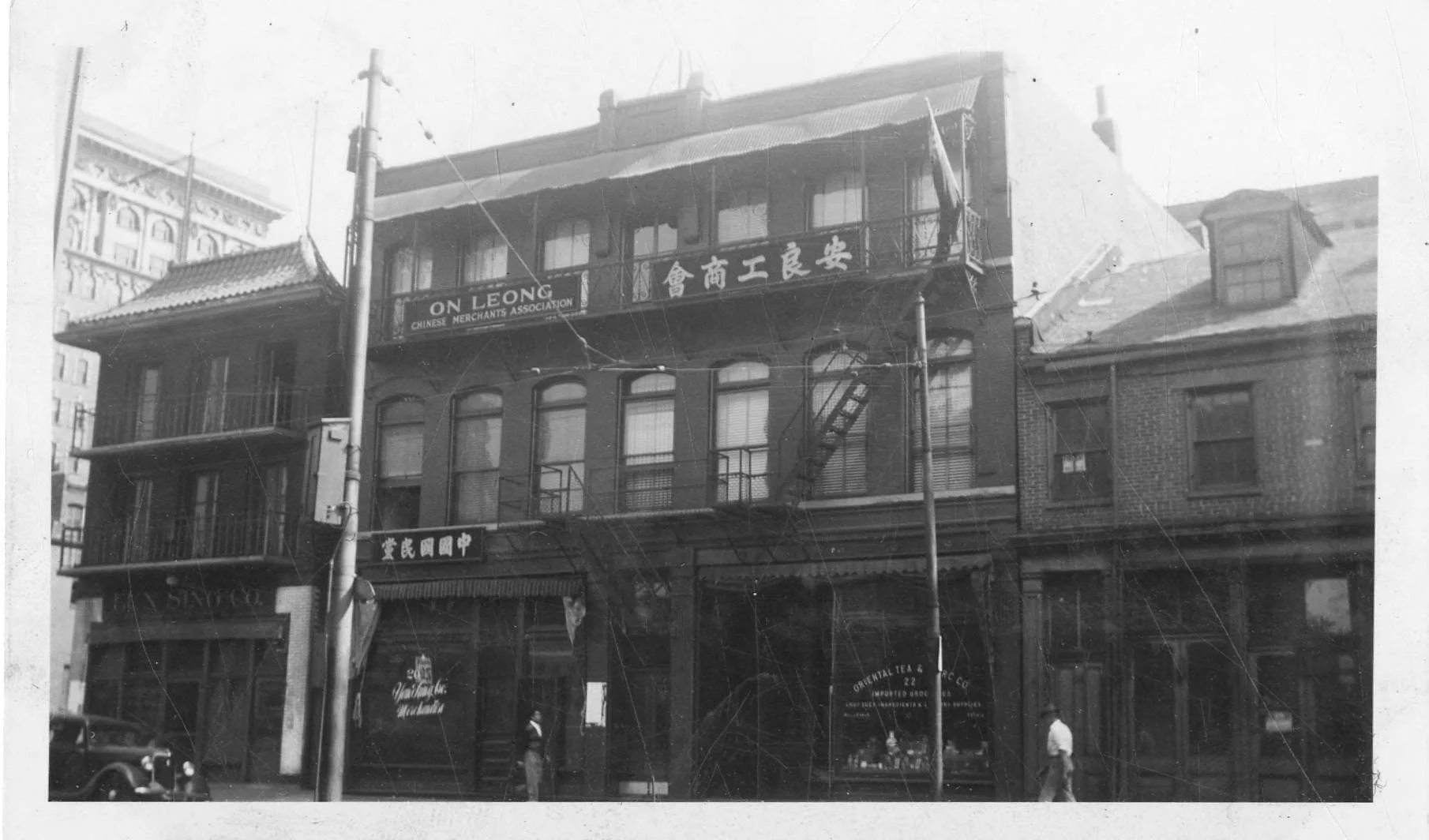
Ref: SHSMO Photo, circa 1938
Hop was now in America.
But like most immigrant stories in the history of our country, we know of the challenges of fitting in, being the newcomer, being the outsider, looking different and feeling isolated or alone. And depending on the immigration reasons, we have also learned about the challenges of maintaining one’s cultural heritage, wanting to remember your homeland, or perhaps not.
Interestingly, we discovered an article that illustrated the challenges of the recent Chinese arrivals to St. Louis. In 1924, the Chinese Nationalist League set up a “School for Chinese” in Chinatown over concerns that the children were already losing an awareness and connection to their homeland.
This School for Chinese would be located next door to where Hop lived, also where the On Leong Merchant’s Association was located.
In this article we discovered that the children living in the Chinatown area attended their local school at the Madison School, a St. Louis Public School still in existence today at 7th Street and Lebanon Drive.

Ref: School for Chinese (St. Louis Post Dispatch, April 11, 1924)
The Chinese Nationalist League had concerns that the children were already “learning to think and speak and dress in the manner of the country of their adoption.” A familiar story.
Was this a problem or is this a natural result of pursuing the “American Dream?”
As it turns out, we discover that the Madison School was the place not just for these Chinese children, but a “melting pot” of immigrants, perhaps also pursuing their dreams. Pretty remarkably, it is identified that at the beginning of the 1928-29 school year 25 nationalities were represented. Not your average student body!
On a side note, these days the St. Louis Public School System has a transitional school devoted to new immigrants and refugee children, called the Nahed Chapman New American Academy. It is comforting to know that nearly a century later, support is still provided to such children.
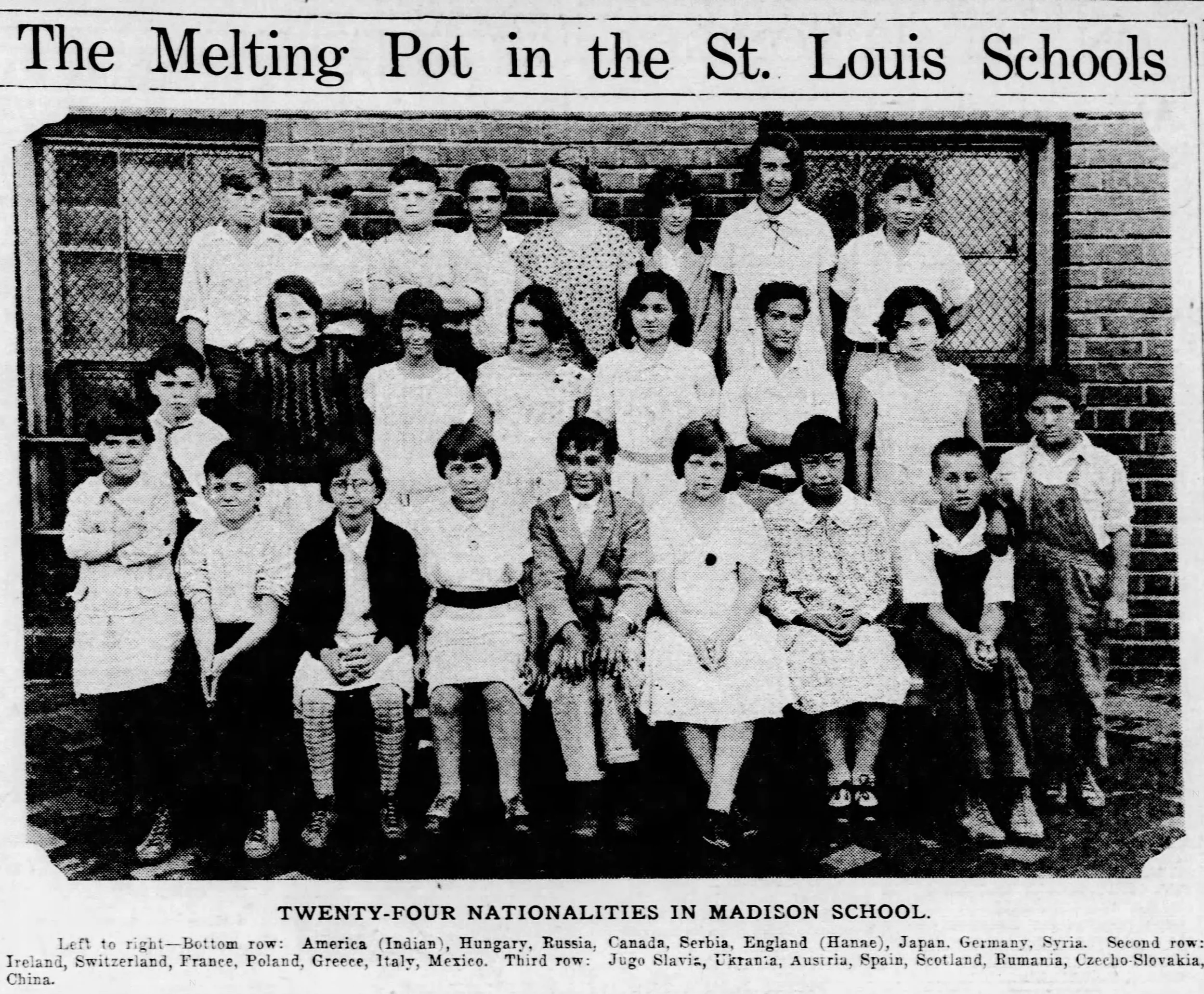
Ref: Madison School (St. Louis Post Dispatch, October 23, 1928)
Hop did not speak English when he came to the U.S. and started at the Madison School in 1923, but through hard work and devotion he caught up quickly, “graduating” from the ungraded Special Classroom where he learned to speak English and learn American customs. After these two years of devoted, hard work his experience would allow him to be more integrated in all the classes and other school activities, such as sports.
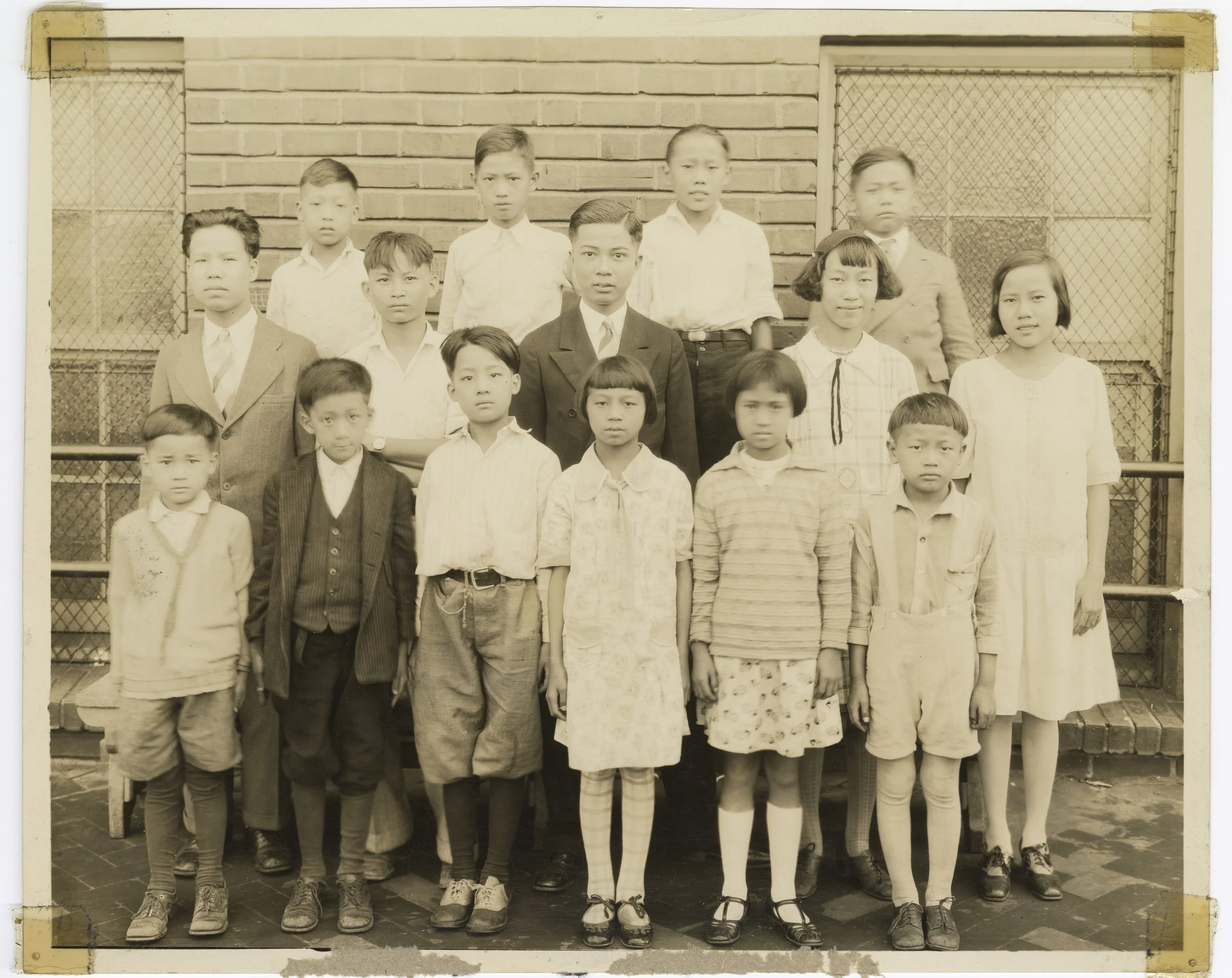
Ref: Madison School – Special Class, circa 1927 (Missouri Historical Society). Hop Leong, 2nd row, 2nd from left.
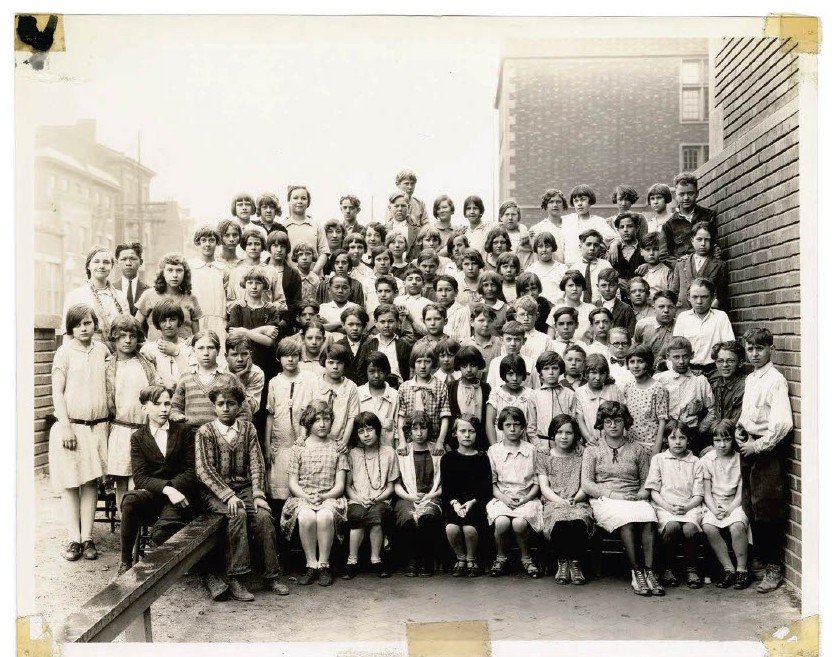
Ref: Madison School - Class Photo, circa 1927 (Missouri Historical Society)
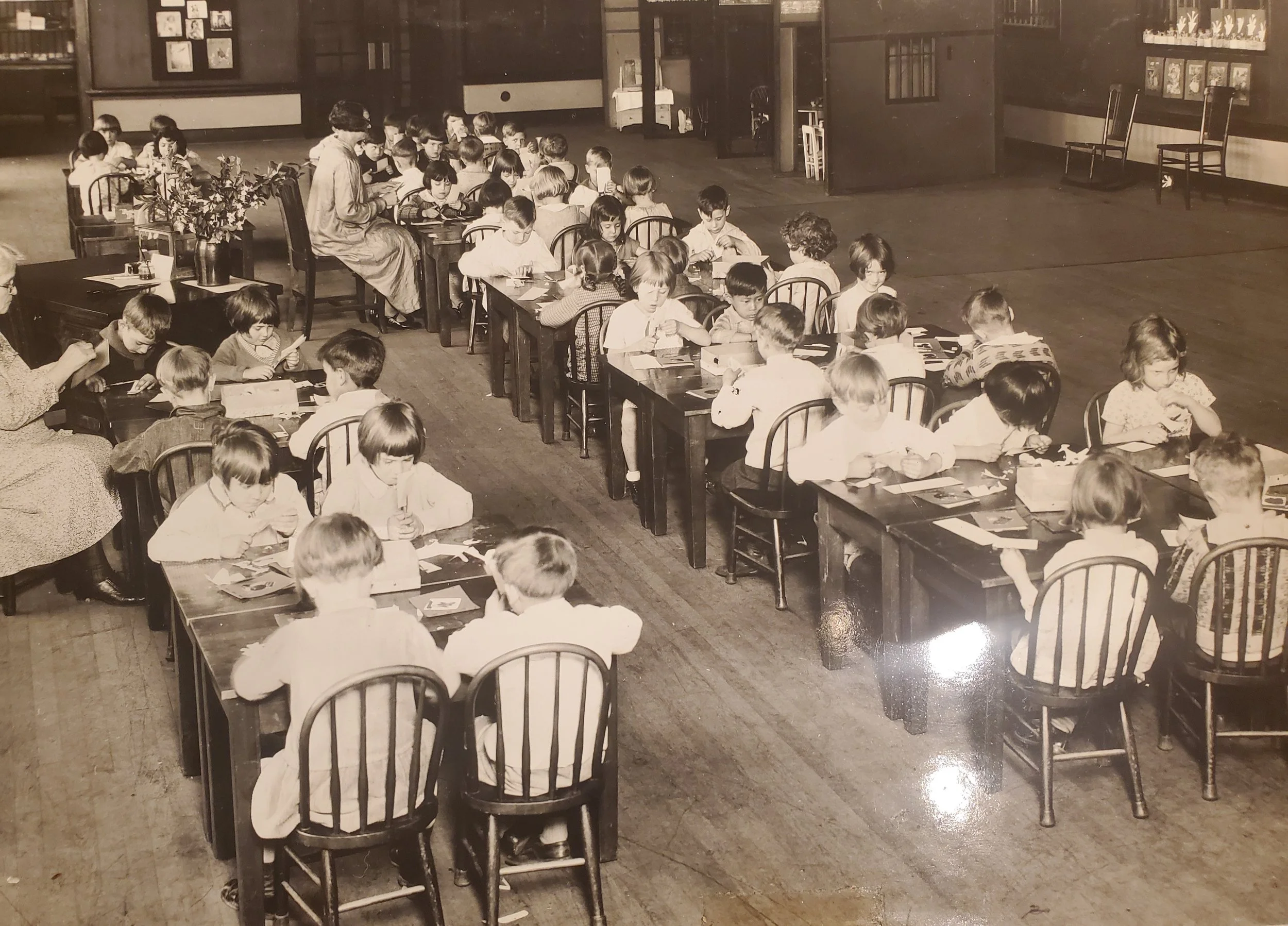
Ref: Madison School – Integrated Elementary Classroom, circa 1927 (Missouri Historical Society)
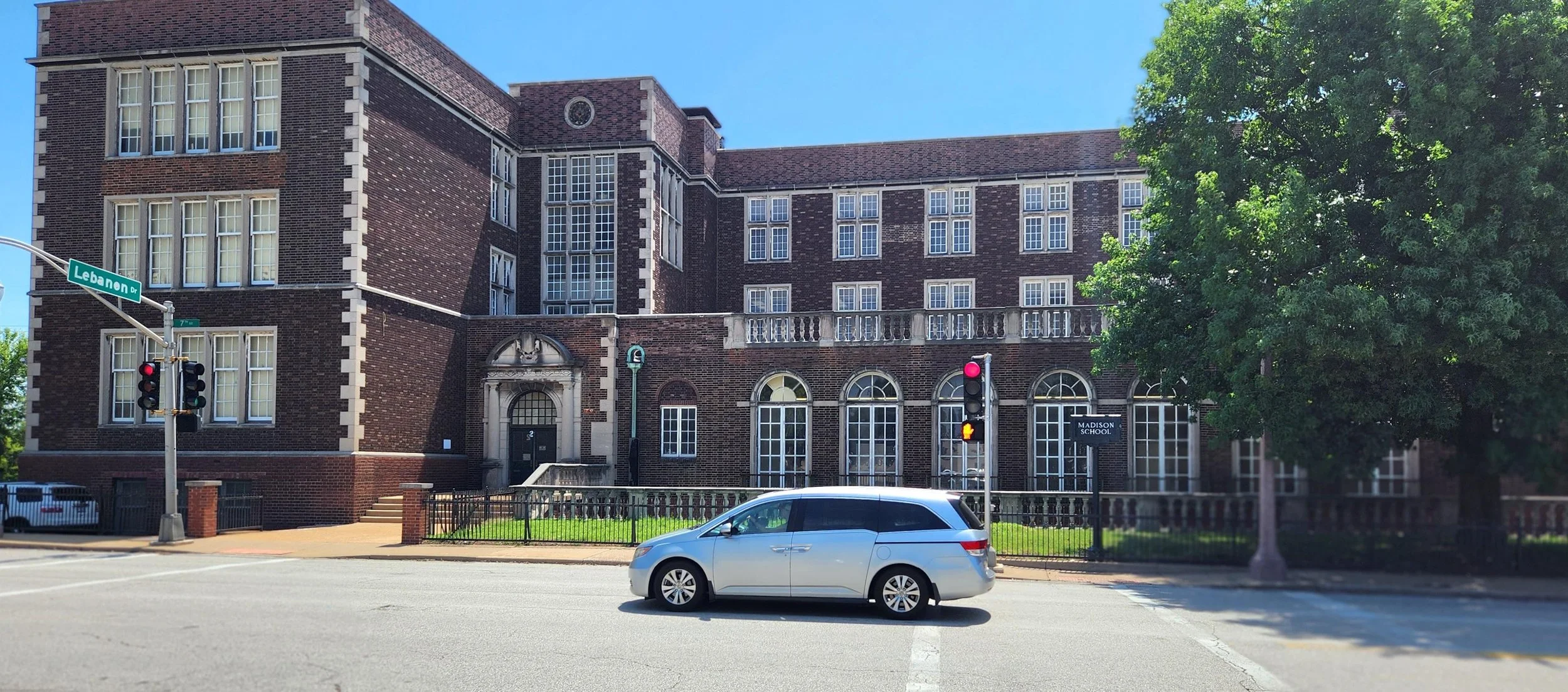
Madison School Today, 98 Years Later
As is often the case, sports seem to break down barriers, at least during those impressionable years in the eyes of children. If you were good, then it was a passport to being accepted or even picked to be on a team. This seemed to be the case for Hop Leong
His proven devotion to learning particularly applied when he discovered and got the opportunity to learn a school sport, America’s Pastime, baseball.
It is recorded that he became so enamored with becoming a pitcher. And deciding he wanted to excel at the game he reached out to fellow student players to teach him all they knew, in particular about throwing a curve ball. He even bought a book about pitching by Bill Doak, a St. Louis Cardinal major leaguer, known as “Spitting Bill,” known for what else, his spitball.
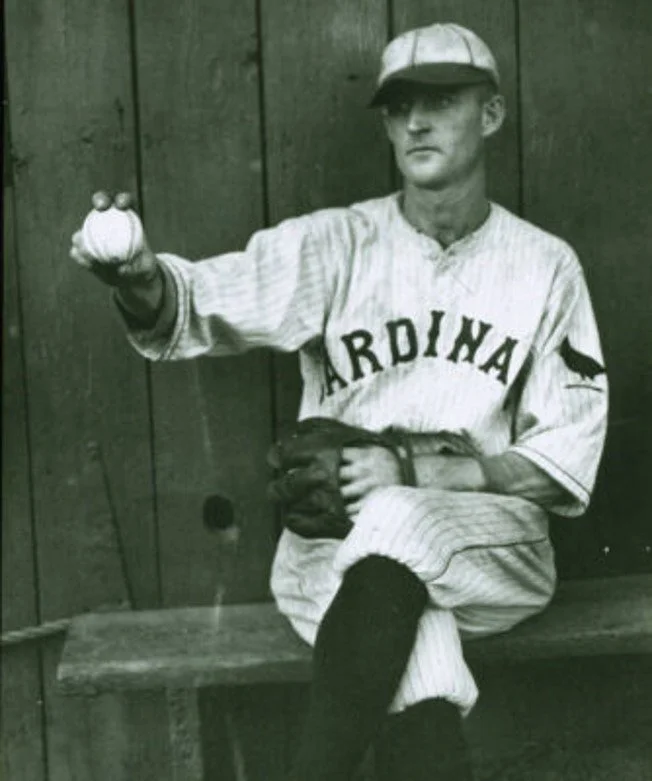
Bill Doak, circa 1922
Hop became such a student of the game that he learned several curves, a knuckle ball, a change-up delivery and even a floater. America’s Pastime was very present.
He would eventually make the baseball team in 1927 as the substitute pitcher. Not bad for not long ago being new to the country, not knowing English or the game of baseball.
Ultimately, as Hop grew comfortable with his American Dream, he opted to have people refer to him as, Henry Lang, wearing every day clothing styles that any kid would wear.
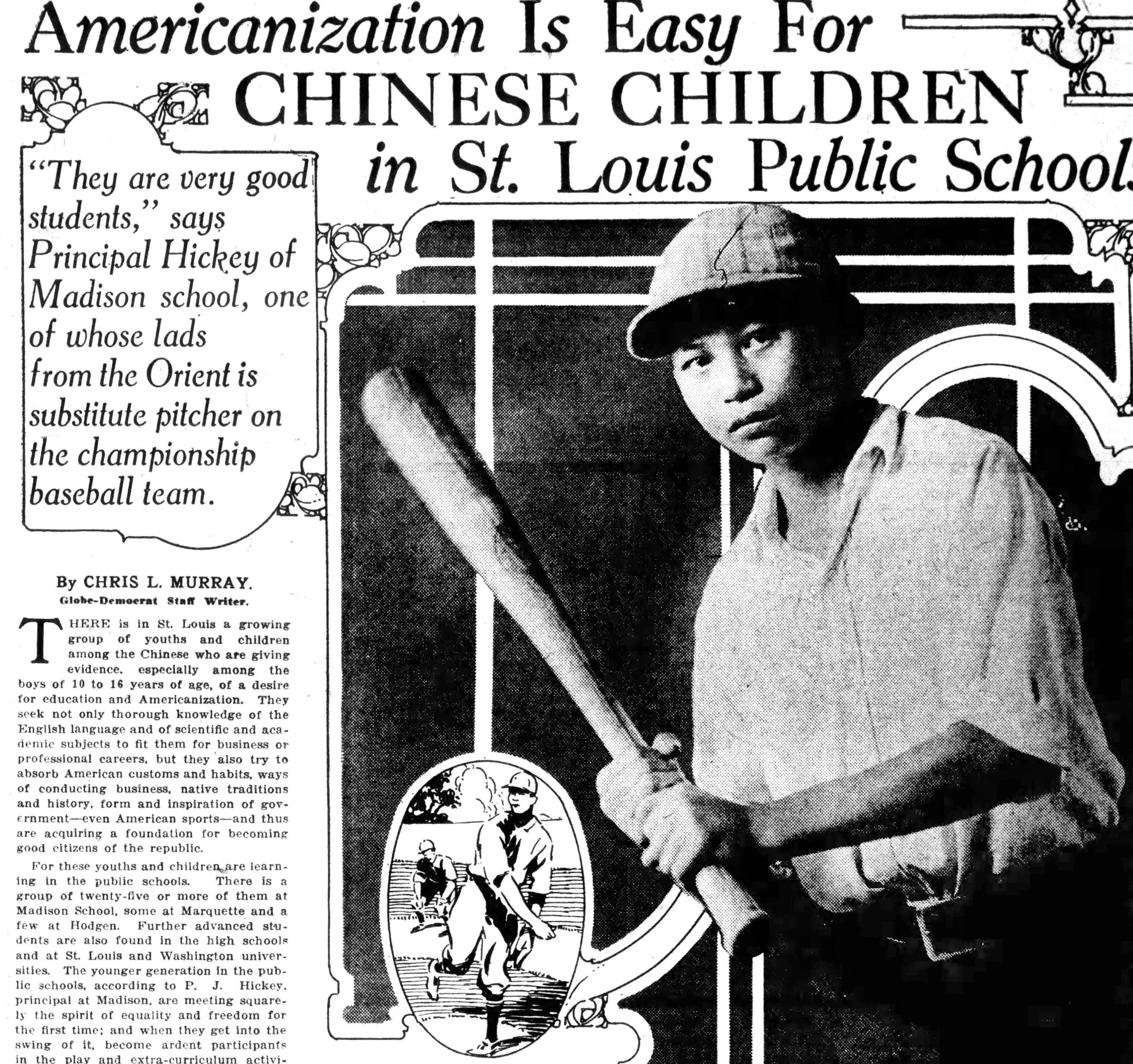
Ref: St. Louis Globe Democrat, September 4, 1927
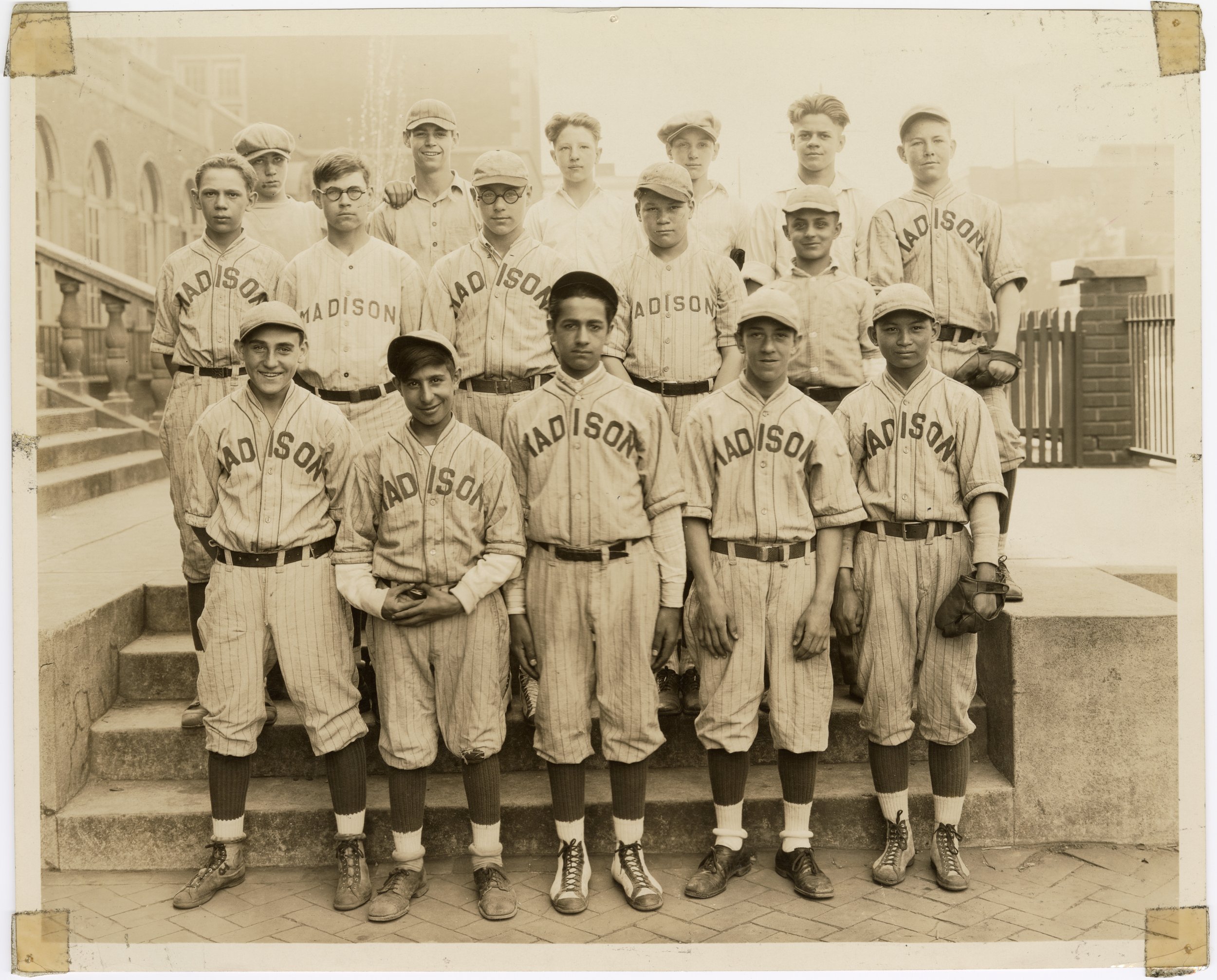
Ref: Madison School Baseball Team, circa 1928. Missouri Historical Society
In 1927, the Madison School baseball team would go on to win the Public School League Championship. And while the young, Henry Lang, did not get to pitch in the championship games, he was still highly regarded by his teammates. He was expecting to be a starter the following year.
Impressed with this championship team and group of boys, on June 16, 1927, Branch Rickey, vice president and general manager of the St. Louis Cardinals, went to the Madison School to speak to the players and parents, ending with an invitation to a St. Louis Cardinals game. Hop Leong was listed on the Roll of Honor, for all the public to see.
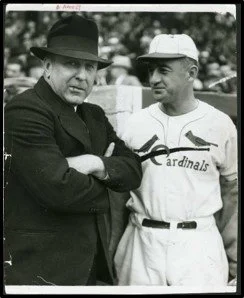
Branch Rickey.
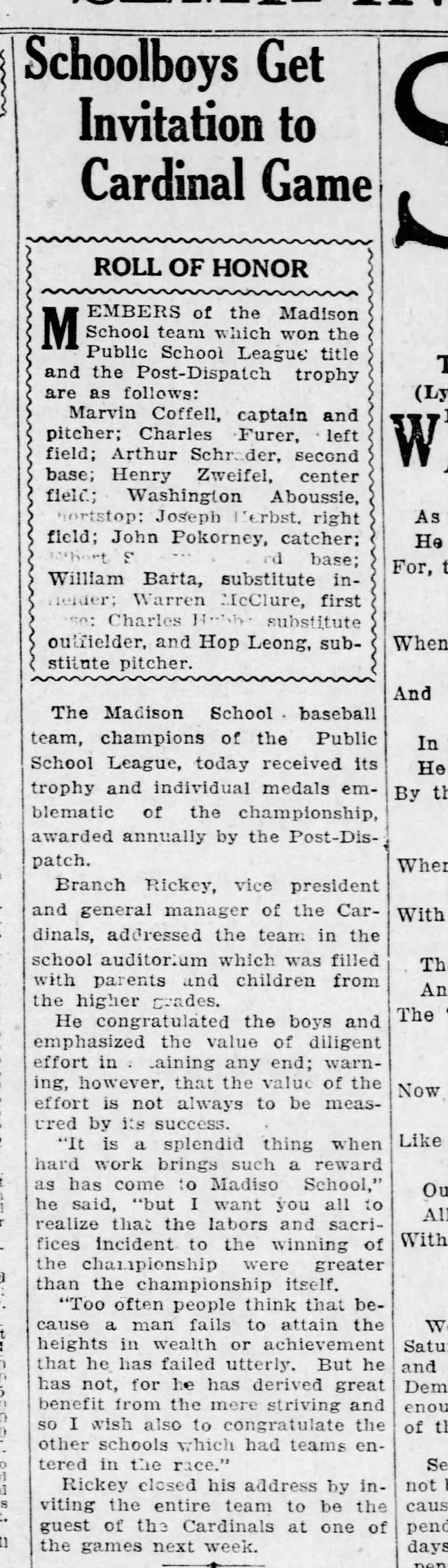
Ref: St. Louis Post-Dispatch, June 16, 1927
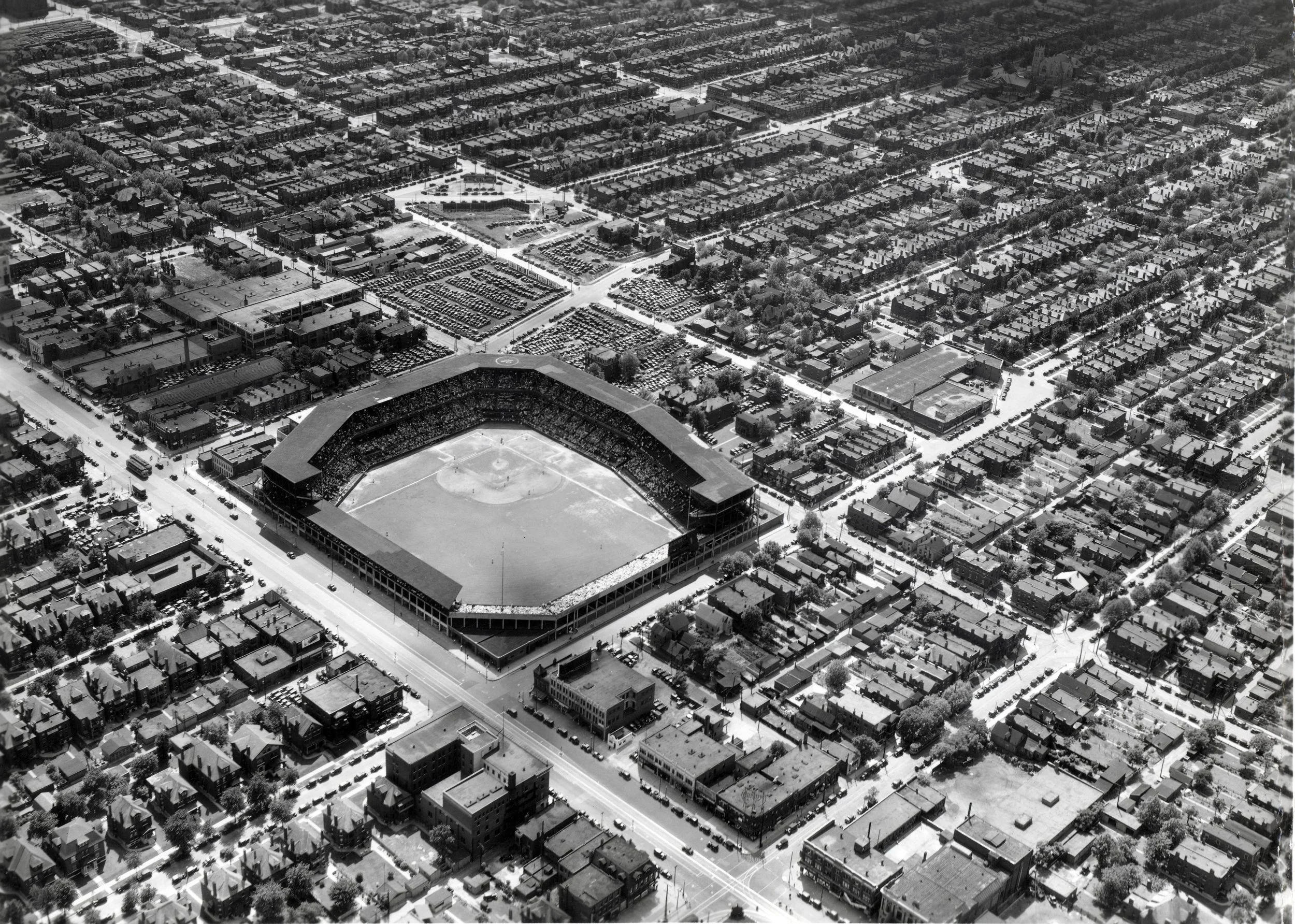
Ref: Sportsman’s Park, circa 1941 (Missouri Historical Society)
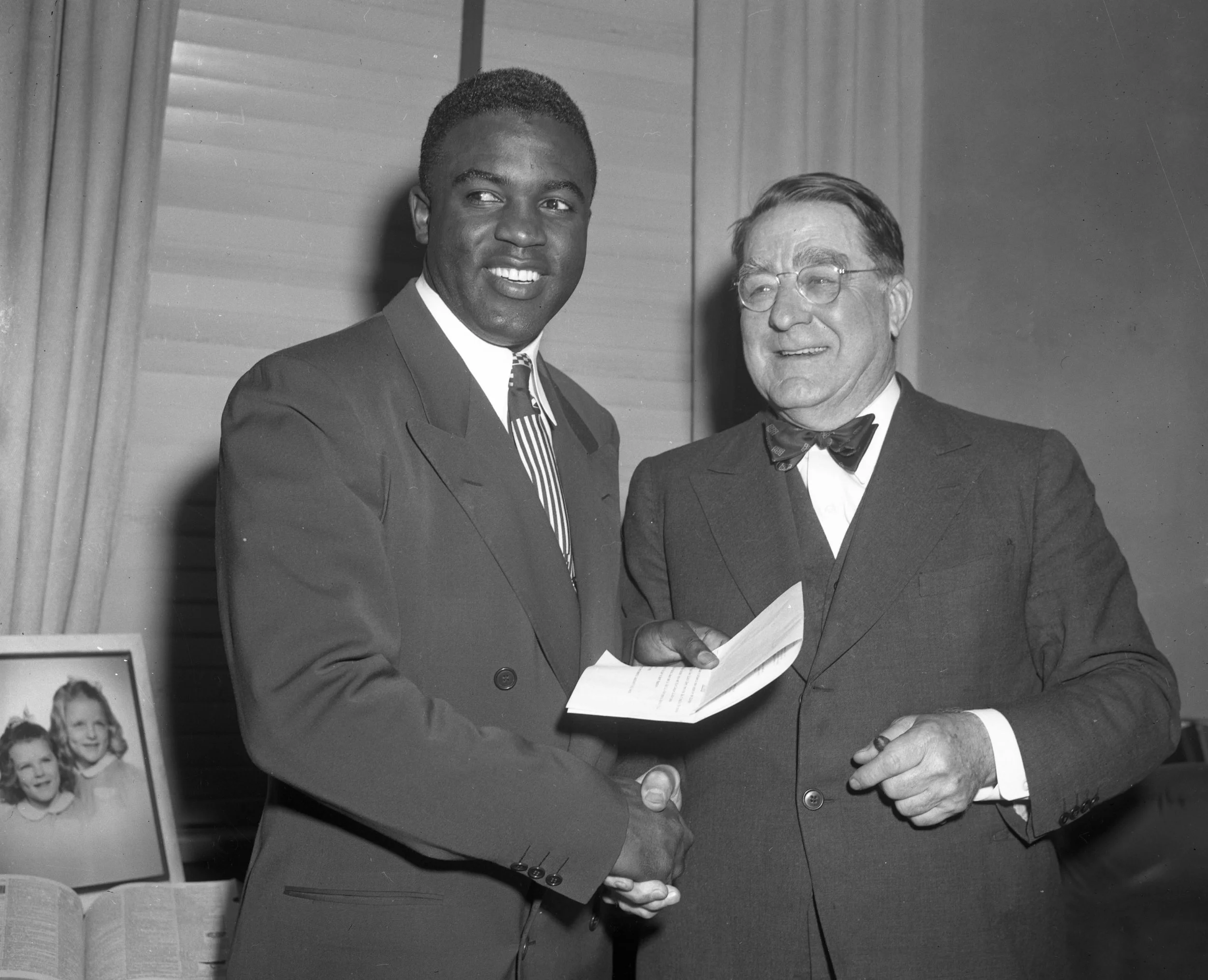
Of course, we know that in MLB history, Branch Rickey would be remembered for bringing Jackie Robinson into the L.A. Dodgers
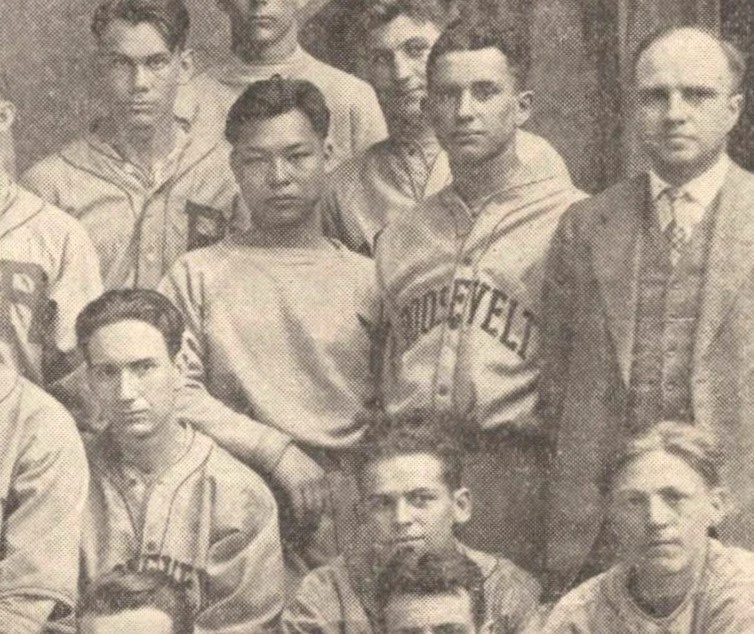
Like many, who have their moments of fame memory, the paper trail on Hop’s whereabouts and that glory moment becomes few and far between. Could this be him, only a year or so later, looking a little older and less innocent, or might this be William Ping (see below)? Our discovery of a tragic story does identify this high school, as does the William Ping article. Such are the mysteries in History. Note: We conclude that this is William Ping. William Ping would be with Hop during his tragedy.
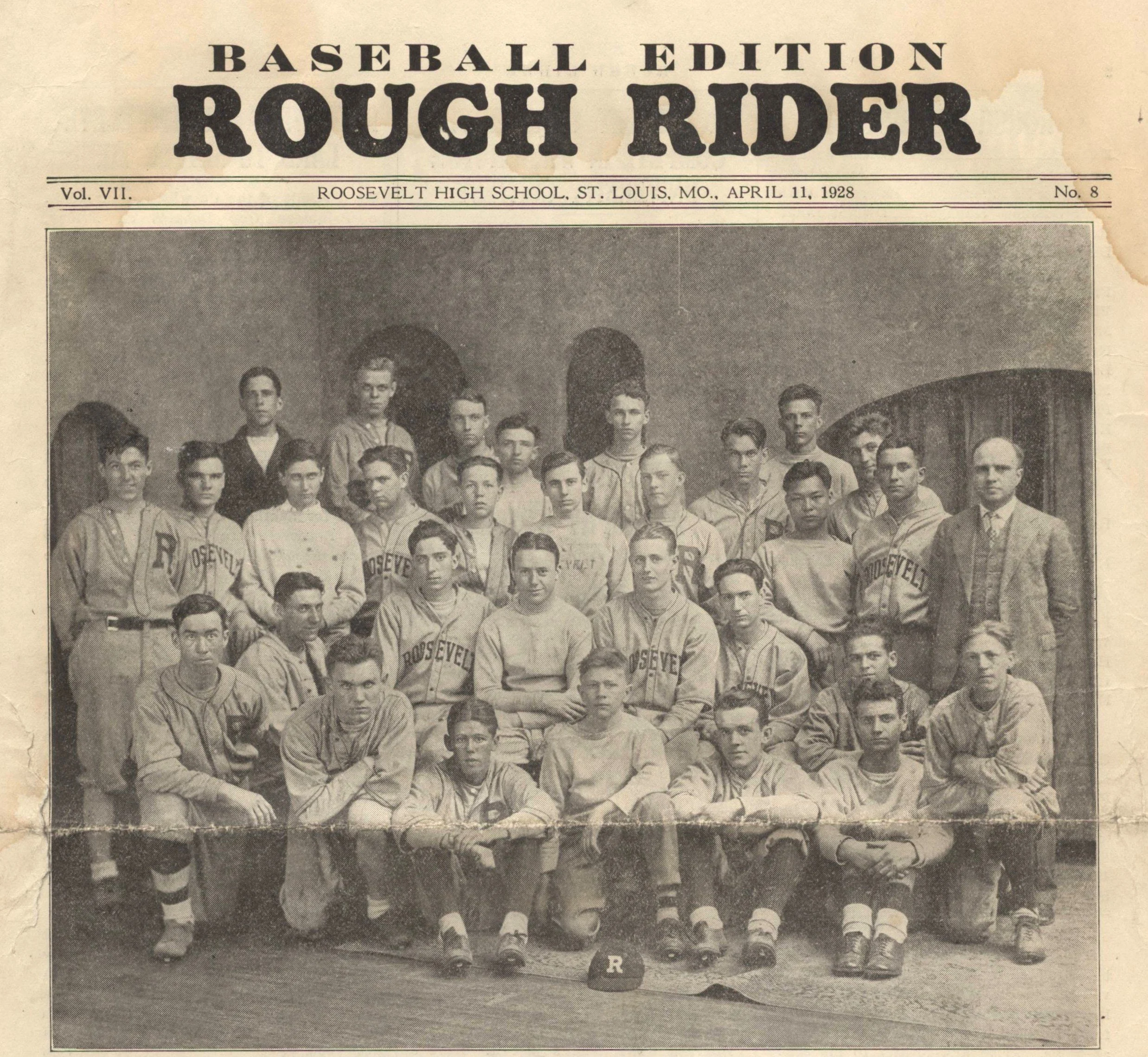
Roosevelt High School Team Photo, 1928.
Tragic Endings
Hop Leong (aka Henry Lang) was living every young boy’s dream, every immigrant’s dream. Who knows what he could have accomplished, for nothing seemed to be an obstacle. Wide-eyed, youthful determination.
So, it is with great sadness, when it was discovered that on June 27, 1931, Hop Leong was caught in a strong current and drowned in the Meramec River, a popular escape from the hot St. Louis summers. He was likely pursuing an (urban) childhood experience of escaping the hot city to experience swimming in a cool river. Given his living conditions, one wonders if he even knew how to swim.
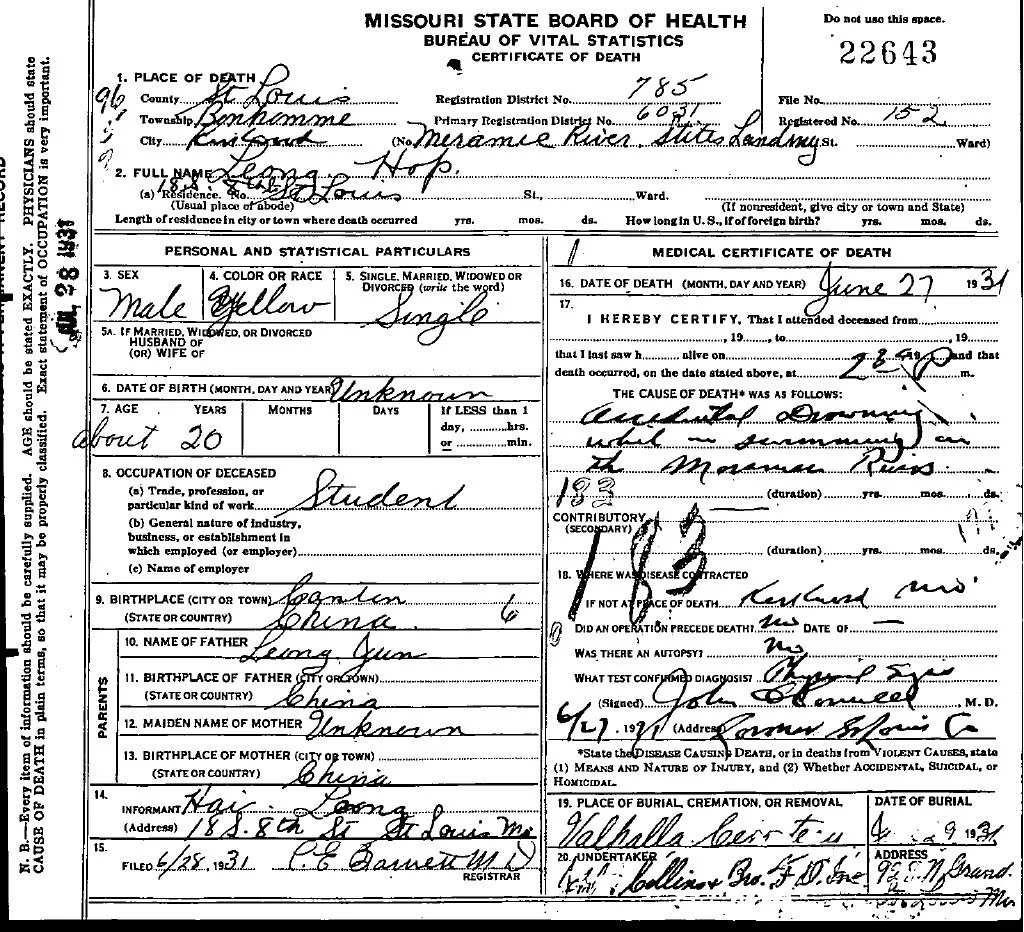
Sad as this story must end, the researching of Hop led to many other discoveries and stories, including yet another baseball connection. The news account (incorrectly identifying Hop’s last name) of his drowning revealed other names, some of which are separate stories for another time.
And if you note in the article, his father had passed away weeks earlier, though this has not been yet confirmed. Tragic endings to an immigrant’s journey that only began in 1923. A short-lived American dream.
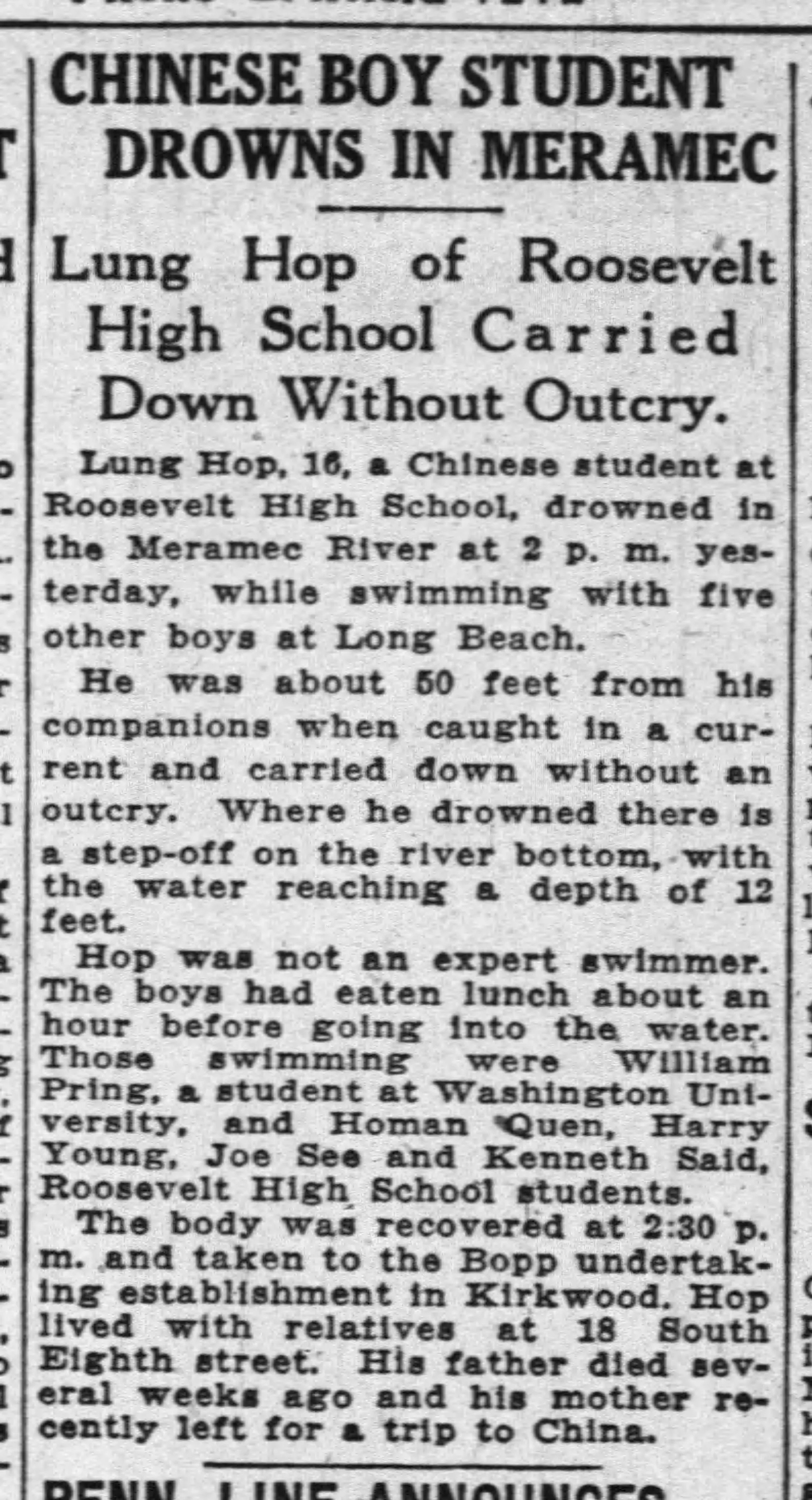
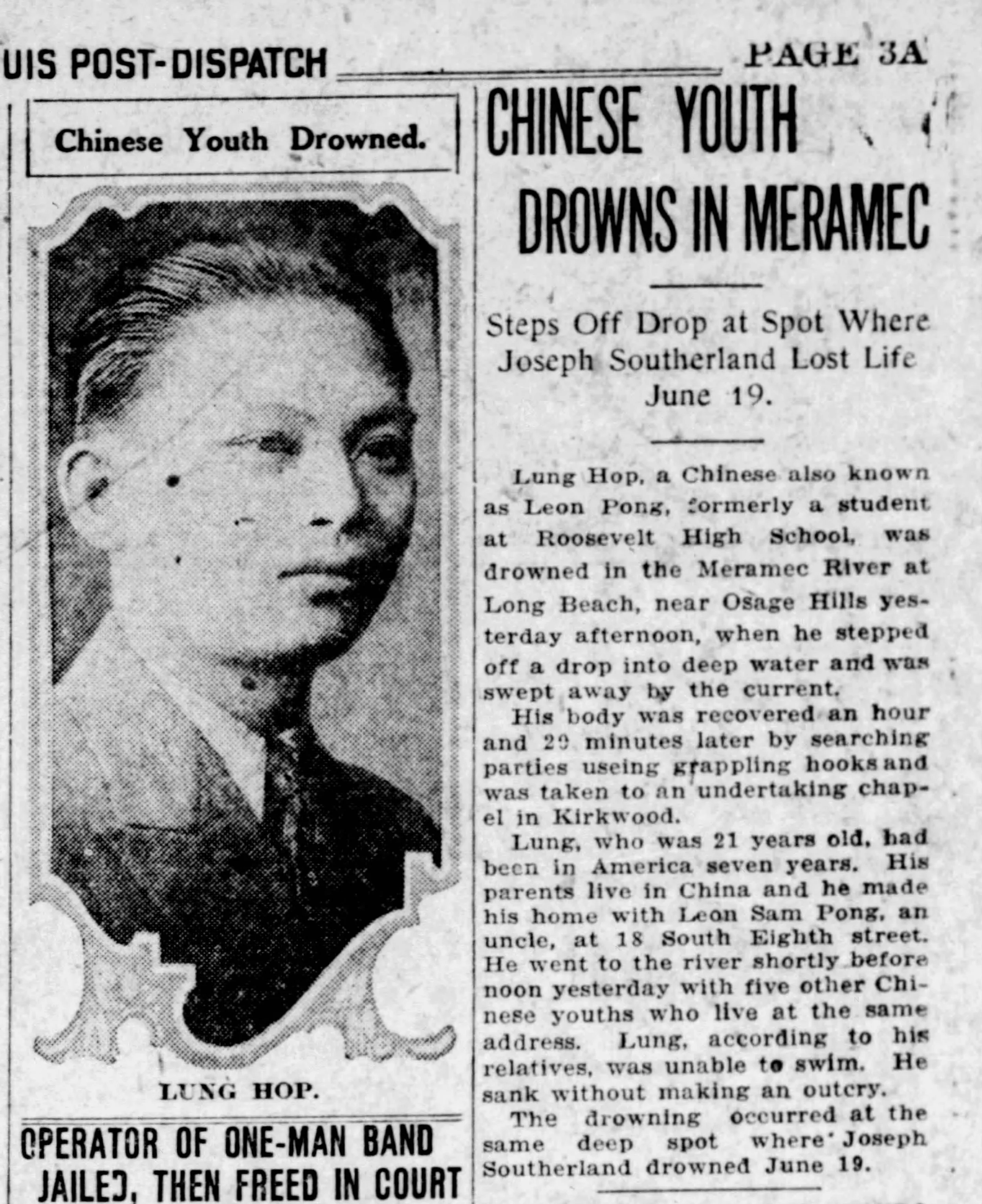
Ref: St. Louis Post Distpatch. June 28, 1931
One boy in the news account, William Ping (incorrectly identified as Pring) was another baseball star that the local media became fascinated with. He would eventually become an engineer for Century Electric Co. in St. Louis. He too attended Roosevelt High School.
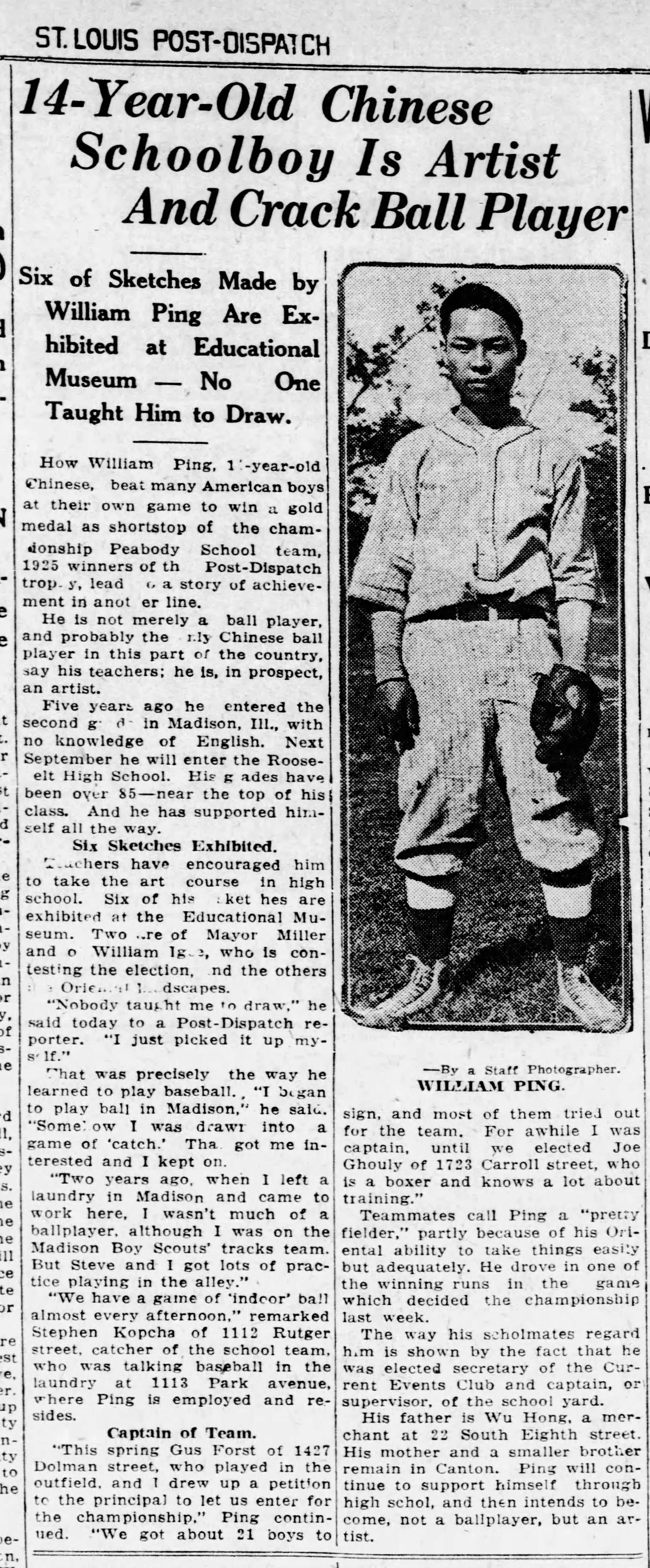
Ref: St. Louis Post-Dispatch. June 15, 1925.
Hop Leong is buried in Valhalla Cemetery in St. Louis. Valhalla is purported to be the only cemetery where Chinese were “permitted” to be buried in the early 1920s. The On Leong Merchants Association would negotiate to purchase a plot of land from the cemetery to bury the Chinese. That is also another story to tell.
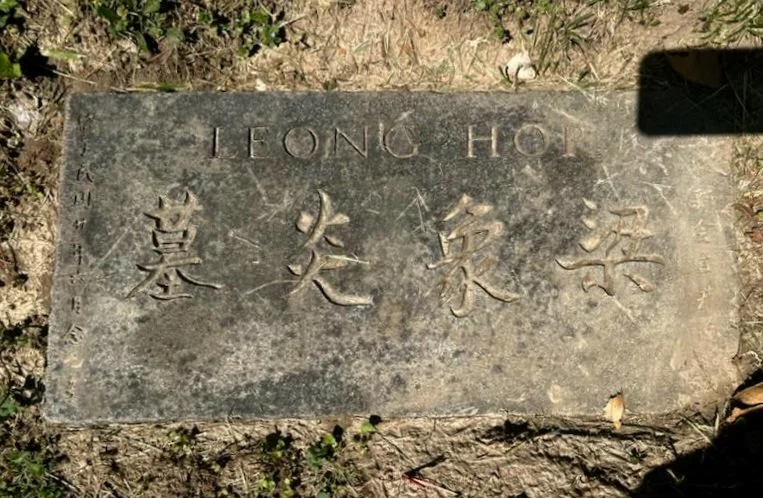
Rest in Peace, Henry Lang.
So, while I may not be able to get Hop Leong (aka Henry Lang)
into the MLB Hall of Fame,
maybe he can have something better than this stone marker on the ground.
As a tribute to those with an american dream.
Or can we get him into the HOF?
#gethenryintothehof
NEWS UPDATE: In the meanwhile, I am pleased to report that The Hop Leong Story has made it into the “St. Louis At Bat: 100 Moments In Baseball History” new exhibit, opening October 3, 2026 at the Missouri History Museum. Opening Events on October 4, 2026.